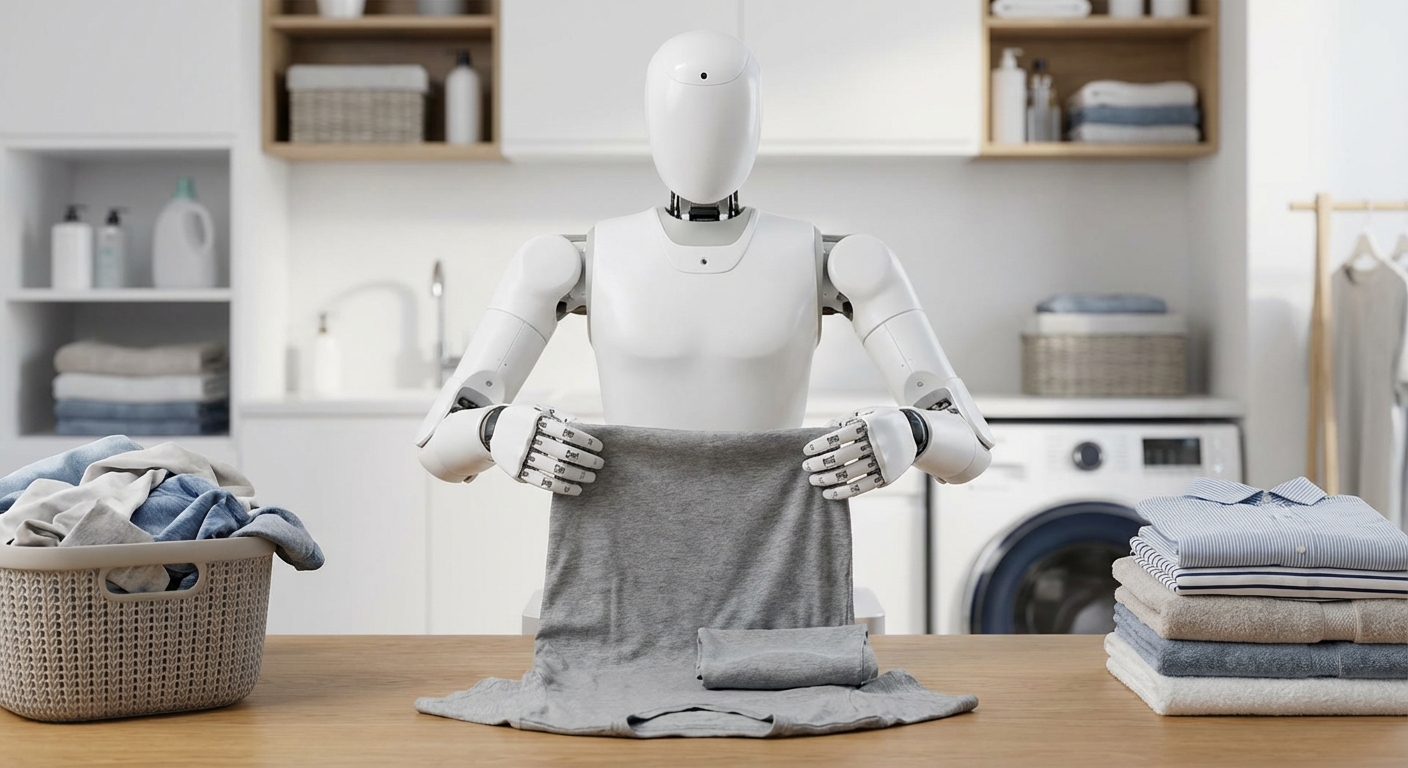

In a field increasingly filled with humanoid robots performing impressive athletic feats, Weave Robotics is taking a different, more practical approach. The company has introduced Isaac 0, a robot that doesn’t do backflips but excels at a notoriously tedious household chore: folding laundry. This stationary, specialized robot represents a pragmatic strategy, focusing on solving a single, complex problem to bring tangible automation into the home.
A Pragmatic Design for a Complex Task
Isaac 0 is a stationary robot that plugs into a standard wall outlet. It features a humanoid upper body, including a torso, neck, arms, and hands, but has a fixed base instead of legs. This design simplifies the engineering challenges of navigation and balance, allowing the company to focus entirely on the difficult task of manipulating soft, deformable fabrics. The system is capable of handling a variety of common clothing items, including T-shirts, long-sleeved shirts, sweaters, pants, and towels, but it currently cannot manage large blankets or bedsheets.
The Human-in-the-Loop Advantage
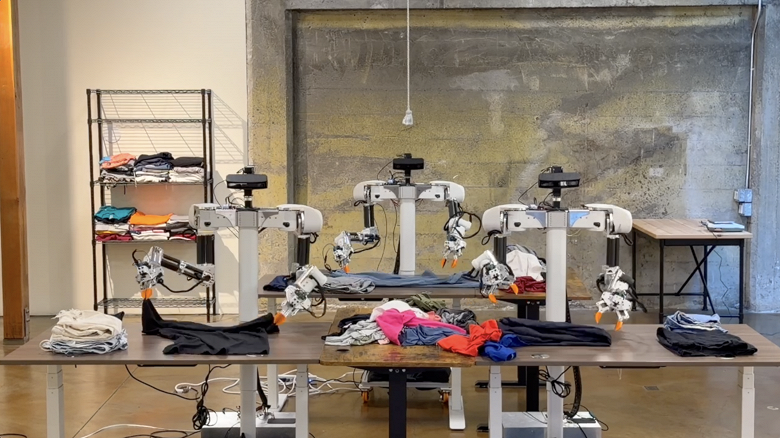
A key aspect of Isaac 0’s current operation is its blend of autonomy and remote human assistance. While the robot handles most of the folding process on its own, it is not yet 100% autonomous. When Isaac 0 encounters a particularly challenging garment or makes an error it cannot correct, a human specialist from Weave can remotely intervene. This teleoperation process, which takes only 5 to 10 seconds, allows an operator to view the robot’s camera feeds and make necessary adjustments to complete the fold. This hybrid approach allows Weave to ship a functional product today while collecting valuable data from these interventions to continuously improve the robot’s AI models for future full autonomy.
Market Context: Specialization vs. Generalization
The launch of Isaac 0 comes at a time of intense competition and investment in the humanoid robotics sector. While companies like Figure AI are demonstrating fully autonomous laundry folding with their mobile humanoids, and others are targeting a wide range of household tasks, Weave’s strategy is to master one difficult chore first. Folding laundry is considered a significant challenge in robotics because fabrics are unpredictable and lack a fixed shape, making them difficult for computer vision and manipulation systems to handle. By creating a single-purpose device, Weave sidesteps the immense complexity of creating a general-purpose home robot while still tackling a meaningful problem.
Pricing and Future Outlook
Weave Robotics has positioned Isaac 0 as a premium device, with a purchase price of $7,999 and a monthly subscription option of $450. Initially, shipments are limited to residents of the San Francisco Bay Area. This pricing places the robot in the luxury gadget category rather than as a mass-market appliance, a common strategy for early-stage hardware startups to fund further development.
While Isaac 0 focuses on a single task, it serves as a stepping stone for the company’s broader ambitions. Weave is also developing a mobile, wheeled version named Isaac, intended to handle a wider range of chores like general tidying. The success of Isaac 0 could prove that the most effective path to bringing robots into our homes isn’t through a jack-of-all-trades, but through a series of highly competent, specialized masters of their craft.