





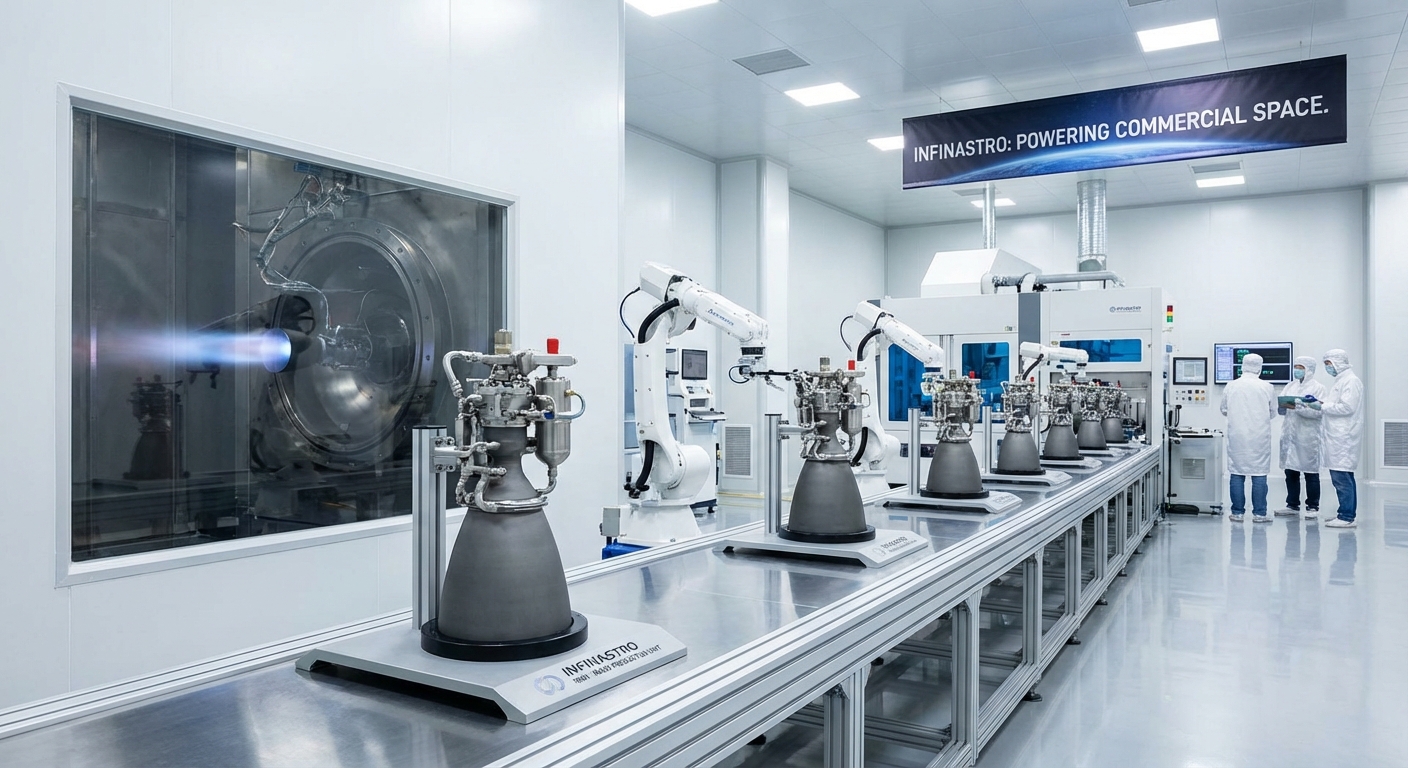

Beijing-based high-tech company Infinastro has announced that its new 100 Newton bipropellant liquid rocket engine has successfully passed a comprehensive series of qualification tests. This achievement moves the project from the development phase to mass production and commercial availability, marking a significant milestone for the company and China’s burgeoning private space industry.
Rigorous Testing and Key Specifications
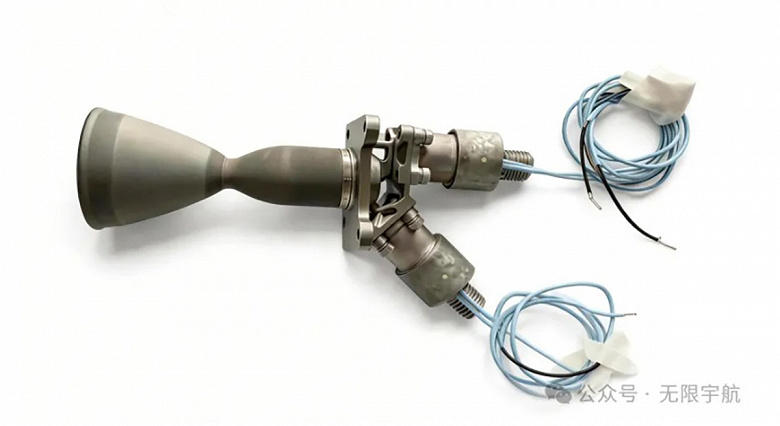
The engine endured a demanding testing cycle to prove its readiness for the harsh conditions of space. This included 17 consecutive ignitions and nearly 4,000 pulse activations, with a total firing time exceeding 1,000 seconds. A key performance metric, the specific impulse in a vacuum, was registered at 290 seconds, indicating high efficiency. During the tests, temperatures in critical components did not surpass 1050–1200°C, staying well below the material tolerance limits. This robust performance ensures a long and reliable service life for the engine in orbit.
Market Significance and Applications
Thrusters in the 100N class are compact, lightweight, and essential for precise in-space maneuvering. They are not used for launching from Earth but are indispensable for a variety of critical orbital operations, including:
- Orbit correction for satellites and space stations.
- Attitude control and maneuvering for launch vehicle upper stages.
- Fine-tuned trajectory adjustments for deep-space probes approaching other planets.
The availability of such a domestically produced engine is a vital component for the continued expansion of China’s space capabilities, particularly for the deployment and maintenance of large satellite constellations.
A Key Player in a Booming Industry
Infinastro’s success places it as a key supplier within China’s rapidly growing commercial space ecosystem. The sector saw 50 commercial launches in 2025, accounting for more than half of the country’s total. That same year, 311 commercial satellites were placed in orbit, making up 84% of all Chinese satellites launched. This explosive growth, valued at over 2.5 trillion yuan ($350 billion) in 2025, is driven by both government initiatives and a dynamic private market of over 600 companies. While international giants like Northrop Grumman and Safran have historically led the propulsion market, Infinastro’s certified engine provides a crucial domestic solution for Chinese satellite manufacturers, reducing reliance on foreign technology.
Future Outlook
The transition to mass production for this 100N engine is a critical enabler for the next generation of space infrastructure. Reliable and readily available propulsion systems are fundamental for more agile satellites, sophisticated constellation management, and emerging applications like on-orbit servicing and debris removal. This development is another strong indicator of the maturation of China’s private space sector as it moves from technology verification to large-scale commercial expansion.