




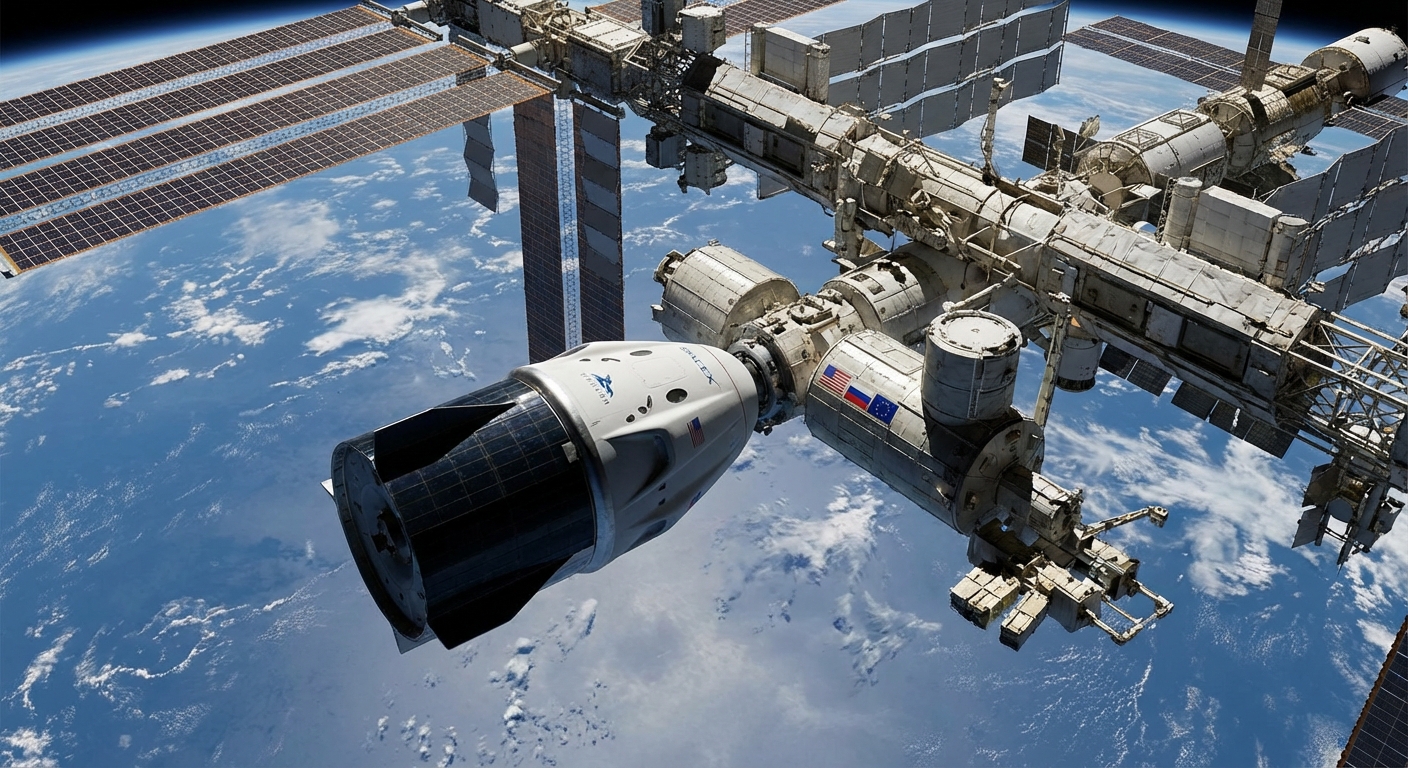

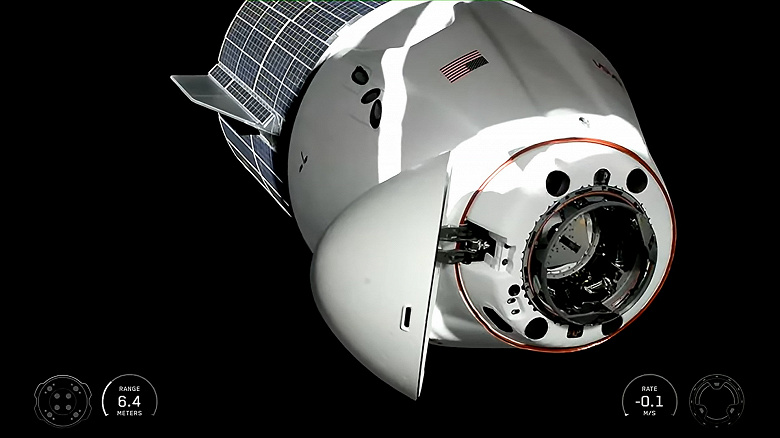
A SpaceX Crew Dragon spacecraft, part of the Crew-12 mission, has successfully docked with the International Space Station (ISS), carrying a multinational crew that includes Russian cosmonaut Andrey Fedyaev. The automated docking maneuver occurred at 3:15 p.m. EST over the Pacific Ocean, as confirmed by NASA’s live broadcast. The Falcon 9 rocket carrying the capsule launched a day earlier from Cape Canaveral, Florida, completing the journey to the orbiting laboratory in approximately 34 hours.
Joining Fedyaev on this mission are NASA astronauts Jessica Meir and Jack Hathaway, along with European Space Agency (ESA) astronaut Sophie Adenot. After a series of pressure and leak checks, the crew transferred to the station, where they are slated to spend about eight months conducting a comprehensive program of scientific research and technical maintenance.
A Symbol of Continued Cooperation
This mission highlights the ongoing U.S.-Russian collaboration in space, which continues despite geopolitical tensions on Earth. The flight is part of a seat-swap agreement between NASA and Roscosmos, designed to ensure that at least one American astronaut and one Russian cosmonaut are always aboard the ISS. This arrangement guarantees the continuous operation of both the U.S. and Russian segments of the station, protecting the lives of the astronauts and maintaining the outpost’s functionality. Fedyaev’s flight follows several other Russian cosmonauts who have flown on Crew Dragon missions since the agreement was signed in July 2022.
Science and Work in Orbit
The Crew-12 astronauts will undertake a wide array of scientific experiments during their long-duration stay. Research on the ISS often focuses on areas that benefit from the unique microgravity environment, including human biology, materials science, and Earth observation. The crew’s agenda includes studies aimed at preparing for human exploration beyond low-Earth orbit and research that could lead to medical advancements on Earth, such as improved treatments for cardiovascular conditions. Upon arrival, the new crew members were warmly welcomed by the station’s existing occupants.
«A huge, huge hello to everyone, – Fedyaev said in Russian during the NASA broadcast. – I am very happy to be here again, to feel the smell of the ISS, which cannot be confused with anything. Many thanks to the SpaceX team, to everyone who saw our crew off. We will get to work».
A Look Toward the Future
As the International Space Station approaches its planned retirement in 2030, missions like Crew-12 underscore the value of international partnerships in space exploration. The legacy of the ISS is not just its scientific output but also the decades of peaceful collaboration it represents. Looking ahead, the space industry is transitioning toward commercially operated space stations in low-Earth orbit. The successful cooperation model of the ISS is expected to influence how future international space ventures are structured, ensuring that space remains an arena for shared human endeavor.