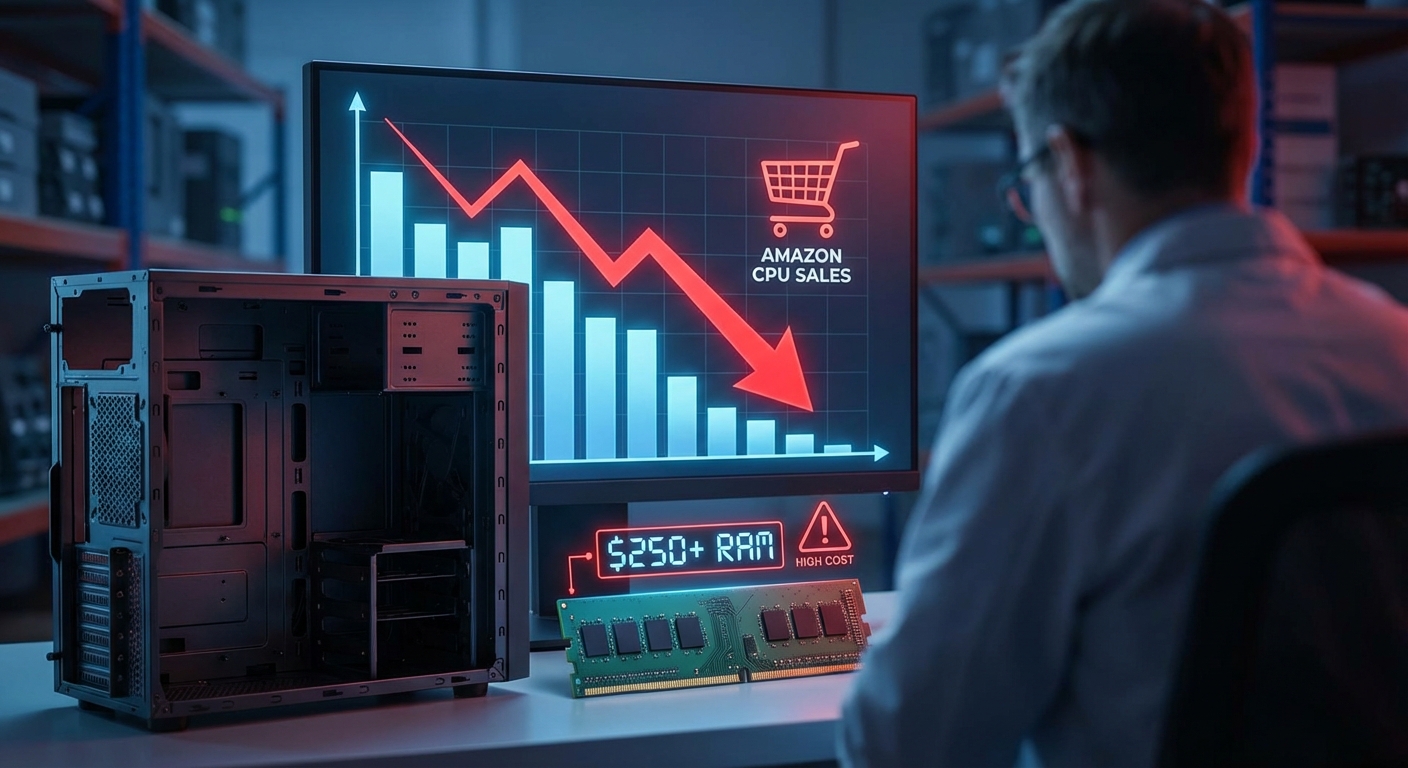

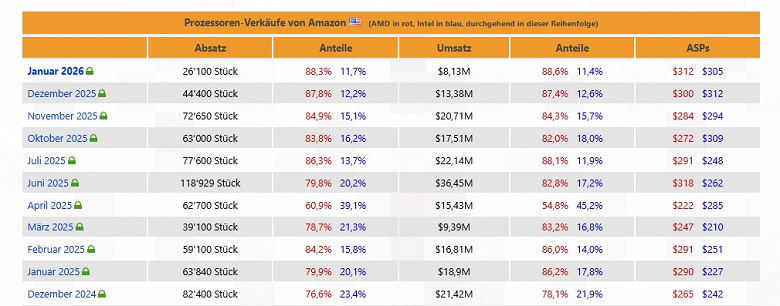
Sales of desktop processors on Amazon’s US marketplace have contracted sharply, dropping by nearly 60% compared to the previous year and reaching the lowest point in months. According to data compiled by TechEpiphany and reported by German outlet 3DCenter, only about 26,000 CPUs were sold in January 2026, a stark contrast to the 63,840 units sold in January 2025. Analysts directly link this steep decline to the skyrocketing prices of other essential PC components, particularly DDR5 RAM, which are discouraging consumers from building or upgrading their systems.
A Grim Picture for the DIY Market
The sales data highlights a worrying trend for the do-it-yourself (DIY) PC market. In November 2025, Amazon sold approximately 72,500 desktop CPUs. This figure dropped to 44,500 in December and cratered at 26,000 in January.  This represents a year-over-year decline of 59% for January, indicating more than just a seasonal lull. The slump is attributed to soaring costs for memory and SSDs, driven by massive demand from the AI data center sector, which is consuming a significant portion of DRAM and NAND manufacturing capacity.
The Price Paradox: Fewer Sales, Higher Average Cost
Paradoxically, while the number of units sold has plummeted, the average selling price (ASP) for CPUs has risen. The ASP jumped by about 34%, from $227 in January 2025 to $305 in January 2026. This suggests that the remaining buyers are primarily enthusiasts purchasing higher-end models, while the mainstream market has been effectively priced out. Despite the overall downturn, AMD has solidified its market dominance on Amazon, capturing an 88% market share in both units sold and revenue for January, with its X3D gaming processors remaining exceptionally popular.
The Ripple Effect of Expensive Components
The core issue is the prohibitive cost of a full system upgrade. With prices for DDR5 RAM, SSDs, and even graphics cards climbing, the incentive to buy a new CPU diminishes. For example, some popular 1 TB SSDs that sold for around $53 in May 2025 were priced at $170 by January 2026. This price pressure is forcing some builders to opt for older platforms that use more affordable DDR4 memory, leading to a surprising resurgence in sales for older-generation CPUs like the Ryzen 7 5800X.
What’s Next for the PC Hardware Market?
The current situation poses a significant challenge for component manufacturers. Analysts predict that the memory shortage and high prices will persist through at least the first half of 2026, potentially leading to an overall PC market shrinkage of 5-9%. This could force manufacturers like Intel and AMD to adjust their pricing strategies or product roadmaps. For consumers, it signals a period of uncertainty, as the dream of a new PC build remains stalled by the high cost of essential components.