



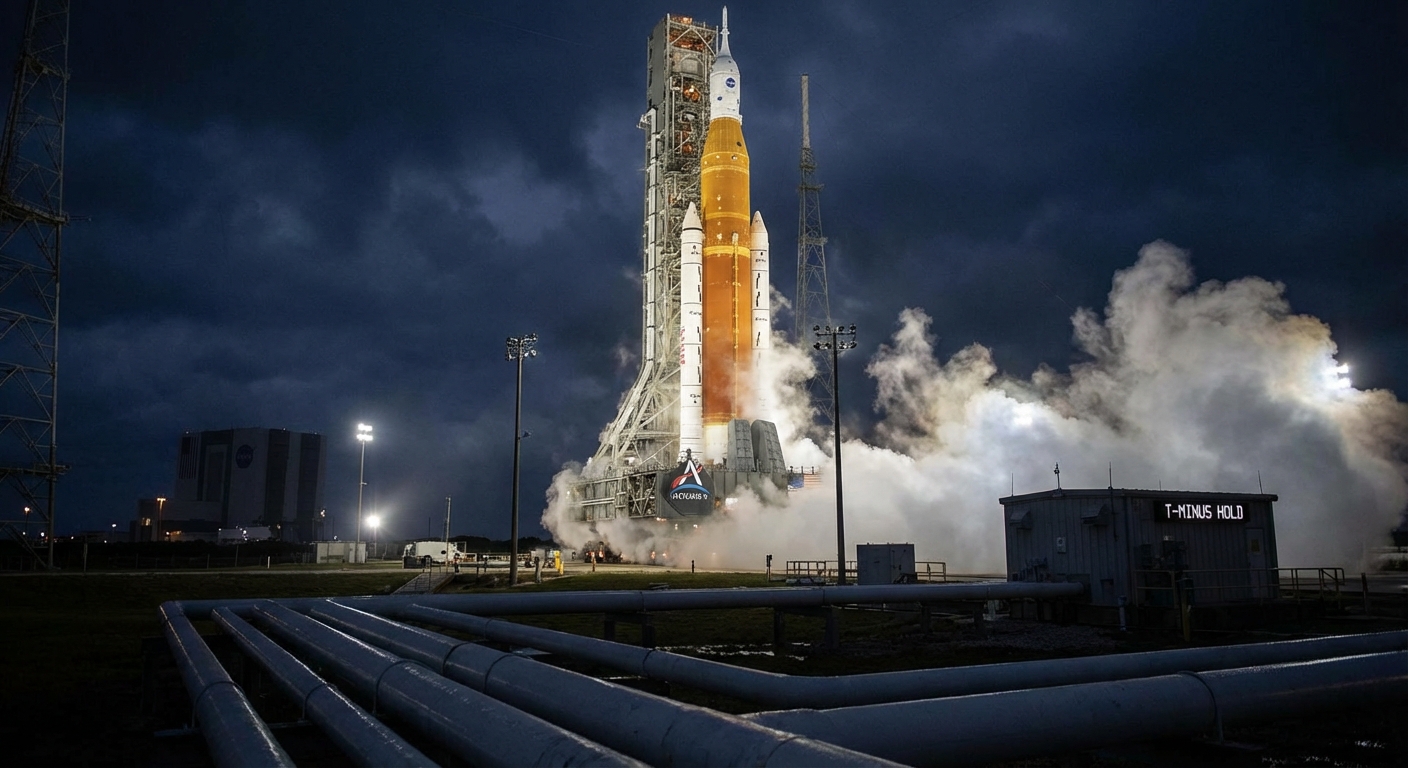

NASA encountered another hurdle in the preparations for its historic Artemis 2 mission after a key fuel system test on the Space Launch System (SLS) rocket on February 12 was hampered by a ground equipment issue. The incident, which occurred during an attempt to verify new seals designed to fix recurring liquid hydrogen leaks, casts further uncertainty on the readiness of the mega-rocket for its first crewed flight, which the agency hopes to launch as early as March.
Details of the “Mini” Rehearsal
The February 12 test was a focused attempt to assess new seals in the fuel interface that connects ground systems to the rocket’s core stage. These seals were replaced after significant hydrogen leaks were detected during a full wet dress rehearsal on February 2, forcing an early end to the simulated countdown. However, the follow-up test ran into a separate problem when ground support equipment slowed the flow of liquid hydrogen to the rocket. Despite the setback, NASA stated that it managed to gather valuable data from the interface that was the source of the previous leak. Officials reported that early results from the portions of the test they could complete showed an absence of the leaks that plagued the earlier rehearsal.
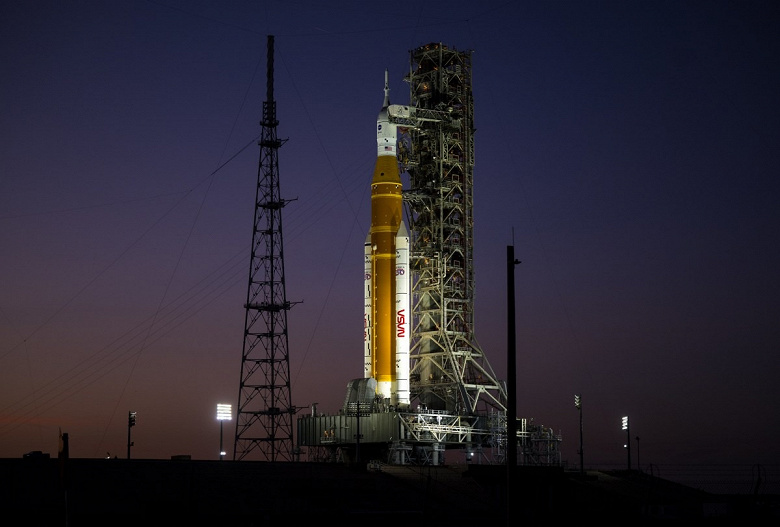
Photo: NASA / Aubrey Gemignani
Official Stance and Next Steps
During a broadcast for a separate mission, a NASA official referred to the test as one of a series of “mini-wet dress rehearsals” designed to maximize the chances of a successful launch. Following the test, the agency confirmed it will inspect the ground equipment and replace a filter believed to have caused the reduced hydrogen flow. Program managers are now analyzing the data before deciding on the schedule for a second full wet dress rehearsal. While a new date has not been announced, NASA has indicated that there is still time to conduct the rehearsal and meet the next launch window in early March.
Context: Hydrogen as the SLS’s Achilles’ Heel
The challenges with liquid hydrogen are not new for the SLS program. Similar leaks caused months of delays for the uncrewed Artemis 1 mission. Liquid hydrogen is an extremely efficient but notoriously difficult propellant to handle. Its tiny molecules can escape through the smallest imperfections, a problem exacerbated by the cryogenic temperatures of -423°F (-253°C) required to keep it in a liquid state, which can cause materials to become brittle and seals to fail. This issue has been a persistent challenge for NASA, dating back to the Space Shuttle era.
A Look to the Future: A Race Against Time and Competition
The Artemis 2 mission, which will carry four astronauts on a flyby of the Moon, is a critical step in NASA’s plan to establish a long-term lunar presence. It will be the first time humans have traveled beyond low Earth orbit since the Apollo 17 mission in 1972. The ongoing delays put pressure on NASA, especially in the context of the rapidly evolving commercial space sector. While the government-funded, expendable SLS costs an estimated $2 billion per launch, competitors like SpaceX are developing fully reusable systems like Starship with the goal of dramatically reducing launch costs and increasing flight frequency. Successfully resolving the hydrogen leak issue is therefore critical not only for the safety of the Artemis 2 crew but also for the long-term viability and credibility of NASA’s deep-space exploration architecture.