





China’s largest chip manufacturer, SMIC (Semiconductor Manufacturing International Corp), has issued a stark warning to its clients: do not reduce chip orders in anticipation of a memory market correction. The company fears that a sudden release of hoarded memory chips, potentially in the third quarter, could create a bullwhip effect, leaving unprepared companies without the necessary logic and power management ICs to complete their products. This advisory comes as the global semiconductor industry continues to grapple with significant shortages, particularly in memory and power-related components.
The Hoarding Dilemma and a Looming Glut
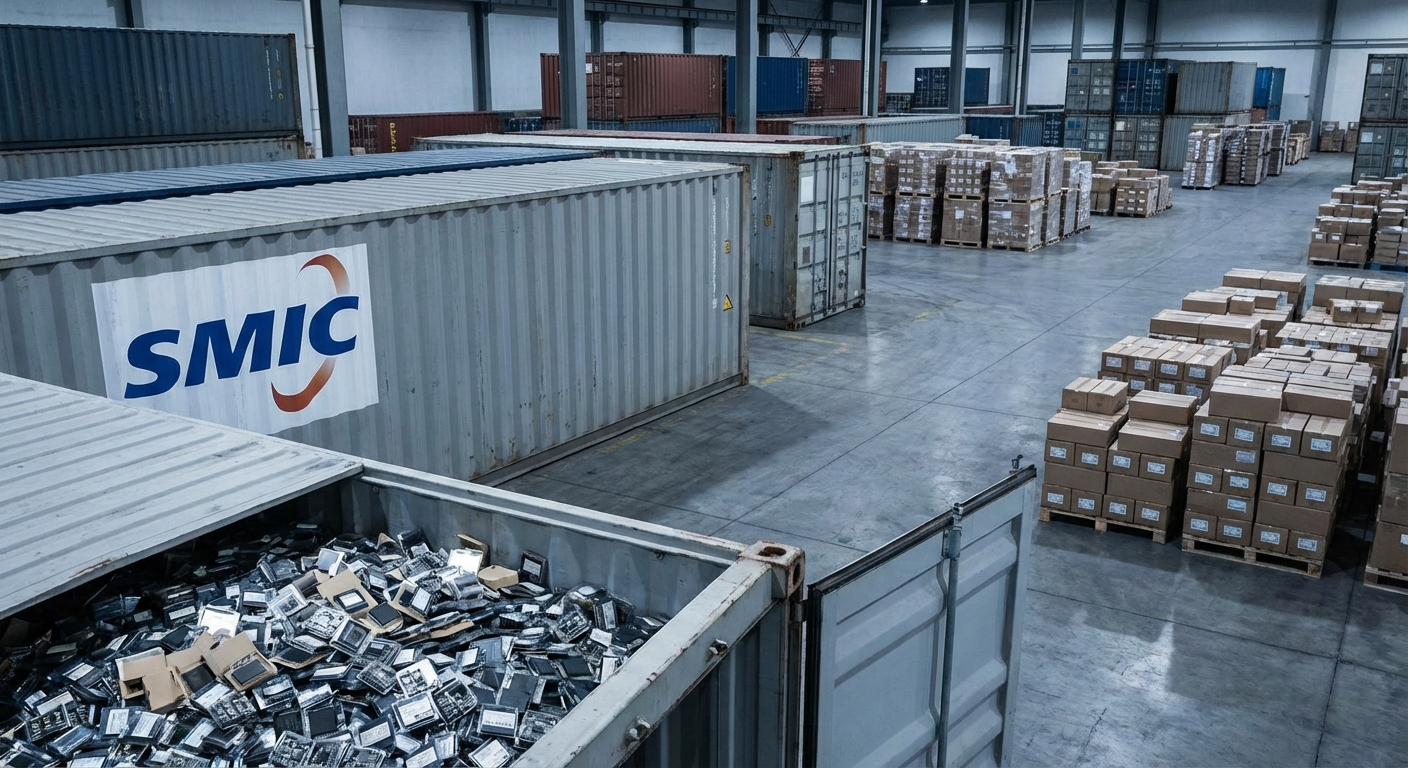
The core of the issue lies in the current market dynamics for memory chips. Driven by unprecedented demand from the AI sector, a severe memory shortage has taken hold, prompting some distributors and supply chain intermediaries to accumulate large inventories. This hoarding strategy aims to capitalize on high prices amid the scarcity. SMIC’s Co-CEO, Zhao Haijun, has noted that this behavior is creating uncertainty, causing clients to hesitate on placing orders for other components. The company anticipates that as new memory production facilities come online later this year, these stockpiles could be rapidly released into the market.
This sudden influx would stabilize memory supply and prices, triggering a surge in demand for the logic and power management chips that SMIC produces. The company cautions that its production lines will likely be fully utilized by then, and clients who cut back on their orders will face significant delays, potentially missing the market rebound entirely.
Navigating a Persistent Global Shortage
SMIC’s warning is set against the backdrop of a multifaceted global chip crisis that has evolved beyond high-end processors to include mature-node semiconductors like power management ICs and microcontrollers. The insatiable demand for advanced memory for AI applications has forced major manufacturers like SK Hynix, Samsung, and Micron to shift production, tightening the supply for chips used in consumer electronics and automotive sectors. This has led to price hikes and supply uncertainty for a wide range of products, from smartphones to vehicles. For full-year 2025, SMIC reported a 16.2% increase in revenue to $9.33 billion, driven by strong local demand and China’s push for supply chain localization.
SMIC’s Strategic Position in a Competitive Market
As China’s foremost foundry, SMIC plays a pivotal role in the nation’s goal of technological self-sufficiency. While it trails industry leaders like TSMC and Samsung in cutting-edge process nodes, SMIC has carved out a critical niche in mature and specialized technologies. The company’s recent capacity expansion, which included adding 50,000 12-inch wafers in monthly capacity in 2025, is a direct response to the high demand in these segments. Despite this growth, the company faces pressure on its profit margins due to rising depreciation costs from its aggressive capital spending, which reached $8.1 billion in 2025.
Future Outlook: A Call for Strategic Foresight
The situation highlighted by SMIC signals a new phase in the semiconductor crisis, where the risk is not just scarcity but also extreme volatility. The industry is bracing for a market that could approach $1 trillion by 2026, driven largely by the AI and memory sectors. In this environment, strategic supply chain management becomes paramount. SMIC’s message to its customers is a call for foresight over short-term reactions. Companies that maintain stable, long-term partnerships with their foundry suppliers will be better positioned to navigate the impending market fluctuations and avoid being caught flat-footed when the memory glut arrives.