


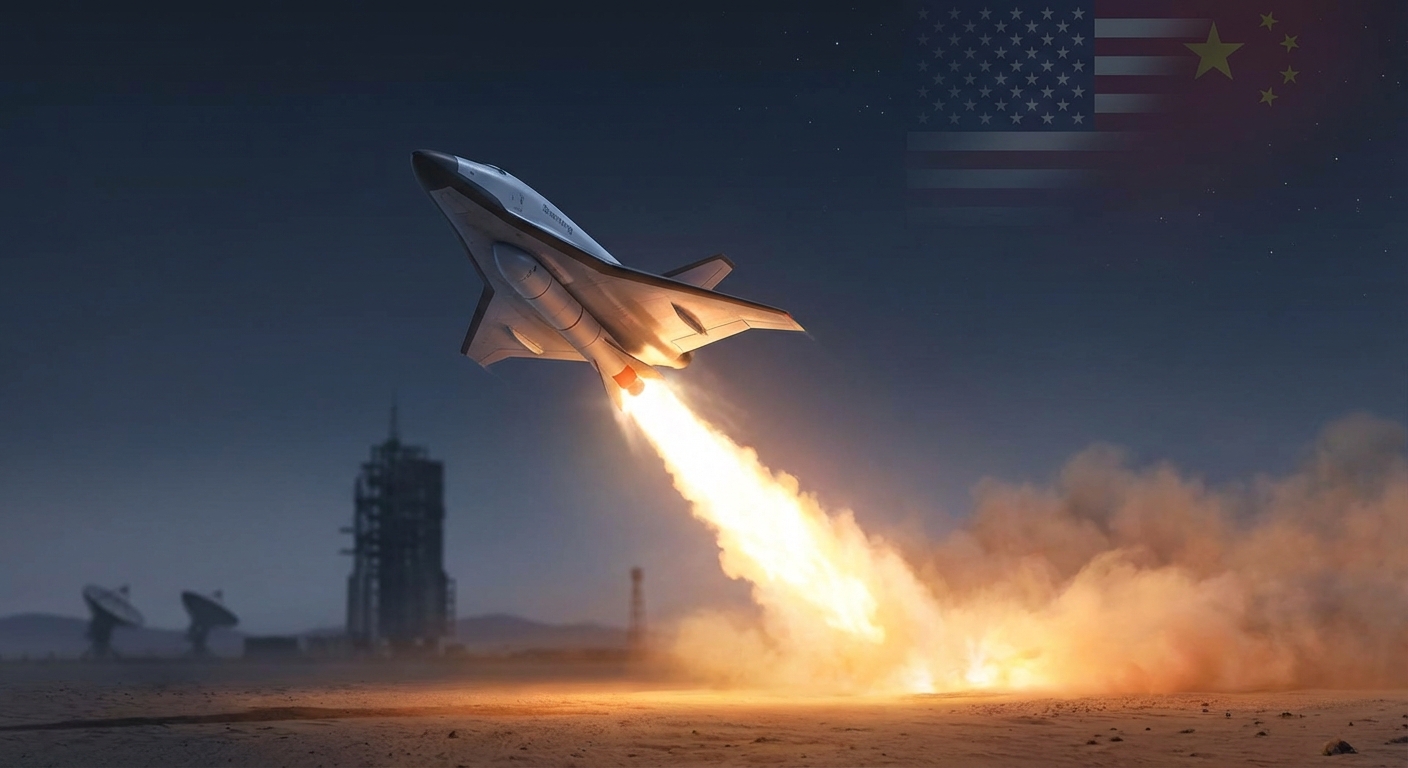




In a significant move to broaden the commercialization of low-Earth orbit (LEO), American aerospace company Vast Space has secured a contract with NASA for its first commercial astronaut mission to the International Space Station (ISS). The launch is scheduled no earlier than the summer of 2027 from a launchpad in Florida, marking Vast’s debut mission to the orbiting laboratory in partnership with the U.S. space agency.
The crew will be transported aboard a SpaceX Dragon spacecraft, launched by a Falcon 9 rocket. The mission participants are expected to spend up to two weeks on the station, conducting scientific research and applied tasks. This development positions Vast as a new key player in the private spaceflight sector, directly competing with Axiom Space, which has organized several private expeditions to the ISS since its first mission in 2022.
NASA’s Strategy: Cultivating a Post-ISS Economy
This partnership is a cornerstone of NASA’s broader strategy to foster a robust commercial economy in LEO. With the ISS expected to be decommissioned around 2031, the agency is actively cultivating private companies to build and operate their own space stations. Under its Commercial LEO Destinations (CLD) program, NASA aims to transition from being an owner and operator of a space station to becoming a customer, purchasing services and crew time from multiple commercial providers. This approach is designed to ensure an uninterrupted U.S. presence in orbit for research and technology development while significantly reducing costs for taxpayers.
A New Contender in a Crowded Field
Founded in 2021 by entrepreneur Jed McCaleb, Vast Space has ambitious long-term goals, including the development of larger space stations with artificial gravity. The mission to the ISS serves as a critical stepping stone, allowing the company to gain invaluable operational experience. This flight precedes the planned launch of Vast’s own single-module commercial space station, Haven-1, which is now targeted for the first quarter of 2027. Initially, the Haven-1 launch was planned for an earlier date, but the schedule was adjusted to prioritize safety and meet all regulatory requirements.
The entry of Vast intensifies the competition in the private space station market. The current frontrunner is Axiom Space, which has already successfully conducted three private astronaut missions to the ISS and plans a fourth in 2025. Axiom’s strategy involves first attaching its commercial modules to the ISS before they detach to become a free-flying independent station. Other major players in this race include:
- Blue Origin: Developing the “Orbital Reef” station in partnership with Sierra Space.
- Voyager Space: Working on the “Starlab” station with its partner Airbus.
The Future of Low-Earth Orbit
The rise of commercial operators like Vast and Axiom signals a fundamental shift in human spaceflight. These precursor missions to the ISS are essential for building the expertise needed to operate the next generation of orbital platforms. While the price for a seat on these flights is substantial-Axiom’s missions have been priced at around $55 million per person-they are paving the way for a future where access to space is more common. This burgeoning LEO economy is expected to support not only space tourism but also in-space manufacturing, pharmaceutical research, and novel technology development, ensuring that the end of the ISS era marks the beginning of a new, more dynamic chapter in space exploration.