





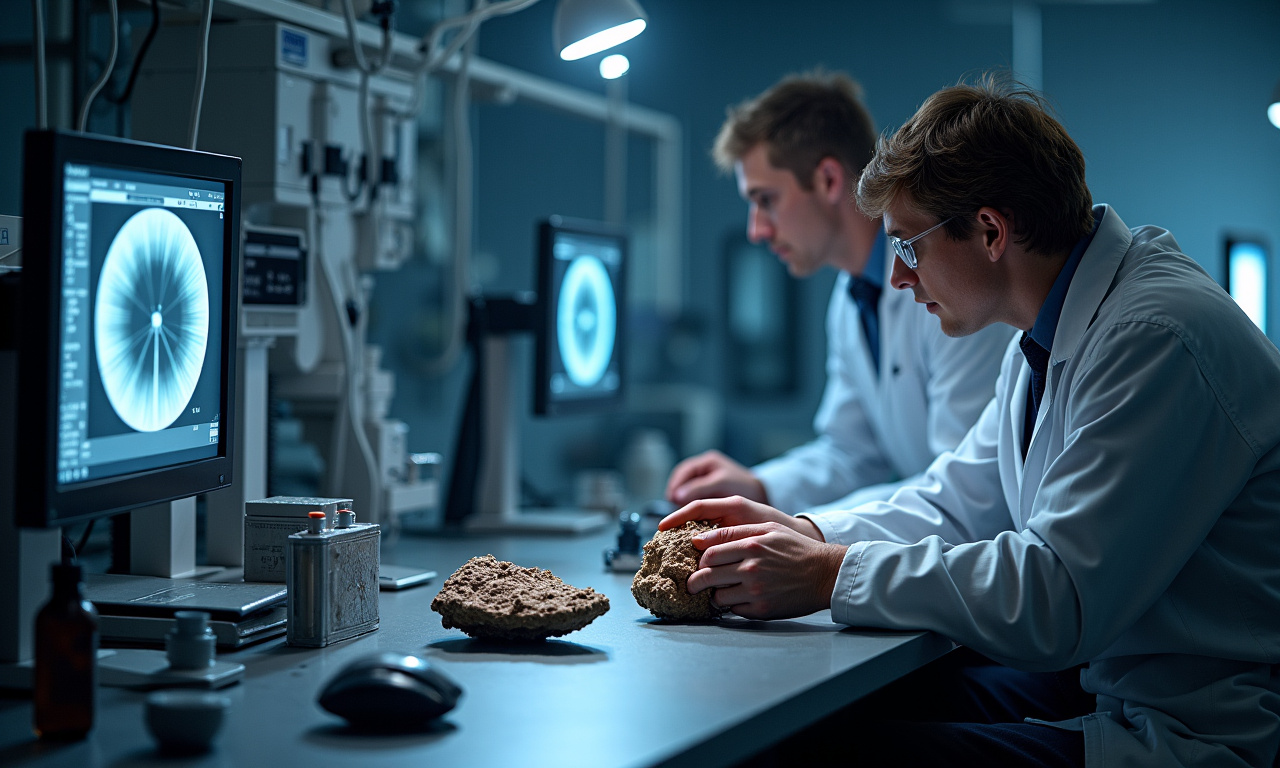

Scientists from the Technical University of Denmark employed X-ray and neutron computed tomography for a non-destructive analysis of the famous Martian meteorite NWA 7034, known as «Black Beauty». NWA 7034 (Black Beauty) is one of the most famous Martian meteorites, around 4.48 billion years old, making it one of the oldest samples of Martian crust available for study. The study results showed the presence of hydrogen-rich inclusions, confirming the hypothesis of liquid water on Mars’s surface in the distant past.
«Black Beauty» is a valuable sample of Martian rock that likely arrived on Earth as a result of a powerful meteorite impact on the Red Planet’s surface. Until recently, studying the meteorite required breaking off fragments that were then ground or dissolved for composition analysis. However, the development of tomography methods has allowed non-destructive research. Two types of CT scans were used: X-ray, which effectively detects dense elements like iron and titanium, and neutron, which more effectively penetrates dense materials and can detect hydrogen – a key component of water.
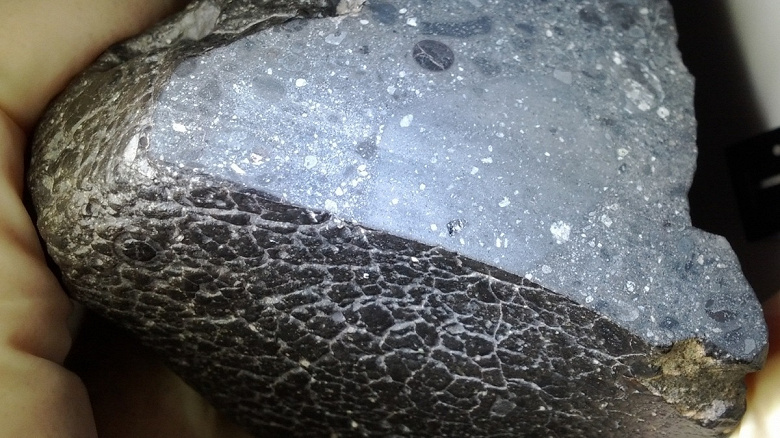
The analysis of a small, pre-polished sample of the meteorite revealed clasts – small rock fragments embedded within a larger rock. The presence of clasts in «Black Beauty» was previously known, aligning with the theory of its formation from an impact on Mars, causing various rocks to fuse together. A new discovery was the detection of hydrogen-rich clasts, represented by hydroxide iron oxide (H-Fe-ox). These inclusions, which account for about 0.4% of the sample’s volume the size of a fingernail, contain up to 11% of the total water content in the sample.
The water content in the meteorite «Black Beauty» is estimated at 6000 parts per million (ppm), a high figure for a planet currently with low water content. Importantly, these results are consistent with the discovery of water-bearing samples in the Jezero Crater by the Perseverance rover. Although «Black Beauty» comes from a different area of Mars than the samples collected by Perseverance, the connection between them confirms the existence of widespread liquid water on Mars’s surface billions of years ago.
This meteorite is essentially a sample return mission in one fragment. The authors hoped to use similar non-destructive CT methods to analyze samples planned for Earth delivery under the canceled Mars Sample Return mission. CT allows examination of titanium containers where samples were collected. However, given the program’s cancellation, the opportunity for direct study of collected samples may not arise soon. There are plans for a Chinese mission to return samples from Mars, but its implementation timeline is not yet determined, though some projections suggest it might occur in the early 2030s.