
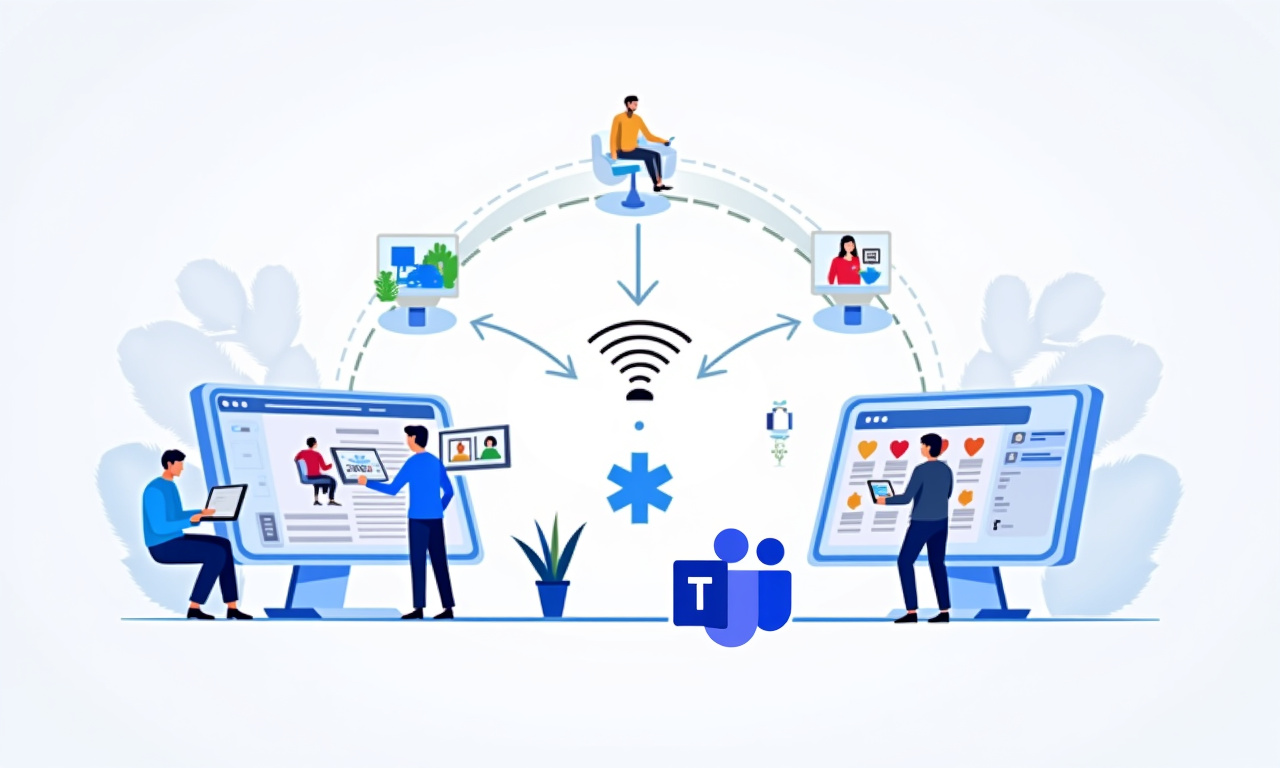

Today Google announced the launch of Google Meet’s compatibility with Microsoft Teams, meaning that users can now join Microsoft Teams video conferences from Google Meet and vice versa. This currently applies to corporate users of Google Workspace cloud services.  Illustration: Google As Google explained, joining Teams meetings from your Google Meet configuration will require specialized Google Meet hardware based on Chrome OS. When joining Google Meet from Microsoft Teams Room, Microsoft Teams Rooms equipment based on Windows will be needed. Google Meet hardware often includes a Chromebox as the computing unit, an intelligent camera for video, a touch controller for call management, and a speakerphone that suppresses echo and background noise. Microsoft Teams Rooms kits usually include a computing unit (either a mini-PC running Windows or an Android-based device), as well as certified cameras, speakers, and microphones.
This interoperability comes at a time when collaboration technology is rapidly advancing, giving businesses even greater flexibility and integration capabilities. With the rise of remote work post-pandemic, companies have demanded higher efficiency and ease in digital communication tools. The cross-platform integration will likely drive higher productivity, allowing users to leverage the best of both ecosystems without hardware constraints. As of today, the exchange rate stands at 1 USD to approximately 75 RUB. This economic dynamic could play a role for businesses budgeting for new equipment compatible with both services.
Experts have noted this move as a strategic enhancement to Google’s offerings, positioning it closer to enterprises that may have previously limited their tools due to compatibility issues. In a related development, competitors like Zoom and Slack have been pushing for their integrations and new features to maintain competitive edges, highlighting an intense race in the tech market to modernize collaboration tools for global connectivity. Market analysts are keenly watching how this interoperability influences competitive landscapes and business user adoption rates, while some insiders hint at further updates to arise from both companies.