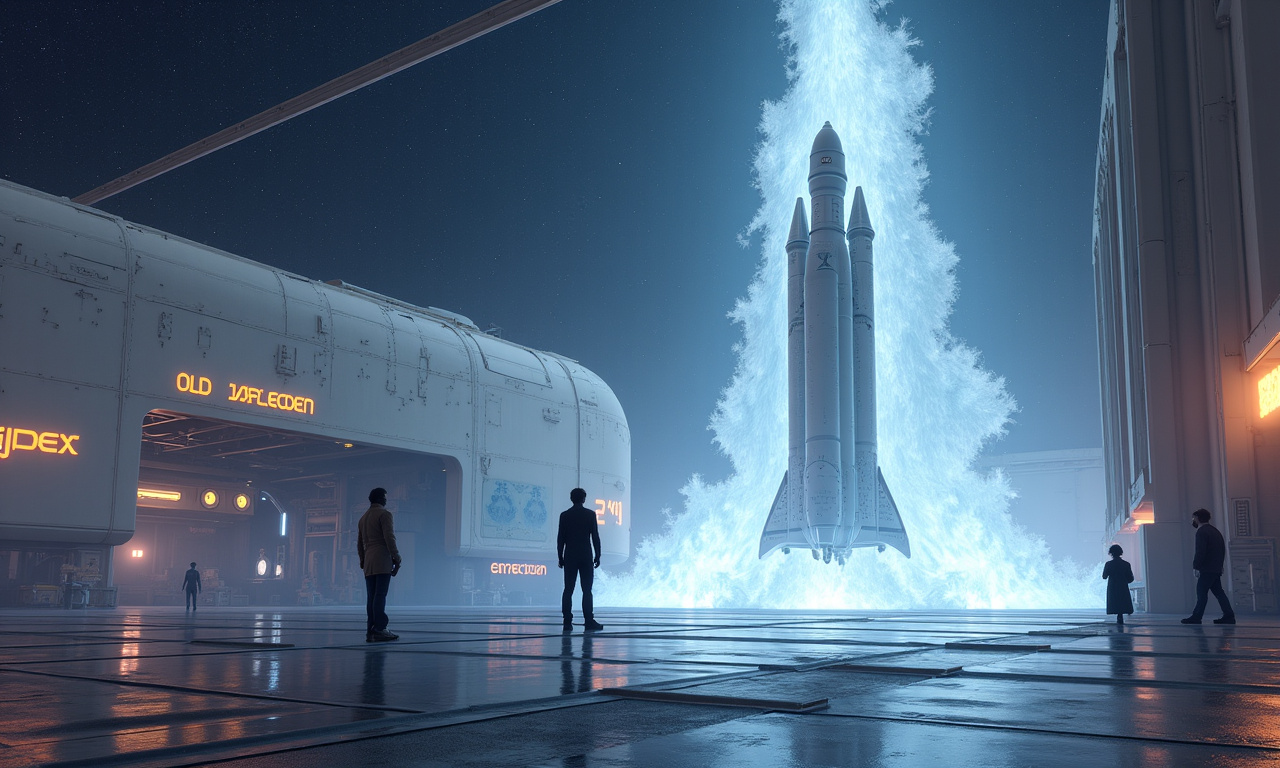

SpaceX has conducted the first cryogenic tests on the Starship Booster 19 as preparations for Flight 12 intensify. During these cryotests, supercooled liquids are pumped into the rocket tanks under significant pressure, allowing for assessments of the structural integrity, seal tightness, and system resilience under extreme conditions. Such tests are deemed a critical stage in the pre-flight readiness protocol, offering the chance to detect potential issues before the rocket reaches the launch pad.
Observers note that Booster 19 has remained on the Massey test site longer than Booster 18 and, notably, has not exploded. Previously, it was reported that SpaceX is proceeding to pre-flight tests of the new-generation Super Heavy B19 booster, which will be utilized in the next Starship flight.
Experts in the aerospace industry have highlighted that SpaceX’s rigorous testing procedures are key to their innovative edge. Each new booster iteration often incorporates lessons learned from its predecessors, with Booster 19 expected to showcase improvements in fuel efficiency and thermal protection systems. Industry watchers are closely monitoring how these enhancements might impact the overall payload capacity for future missions.
Alongside technical advancements, SpaceX continues to push the boundaries of rapid prototyping and iterative development, setting new benchmarks in the space industry. Looking ahead, the successful completion of Flight 12 could herald a new era of high-frequency launches, supporting both commercial and scientific space endeavors. As anticipation builds, all eyes are on SpaceX to see if their upcoming launches will further transform the landscape of space exploration.