



The global smartphone market at the end of 2025 surpassed a significant psychological barrier: according to analysts at Counterpoint Research, for the first time in history, the average cost of a new device exceeded $400.  Image: Samsung Despite only a 4% increase in unit sales, the overall revenue of manufacturers showed explosive growth. Global smartphone sales revenue reached a historic high of $135 billion, indicating that the industry is now growing not through sales volume, but through the increased value of each device sold.
 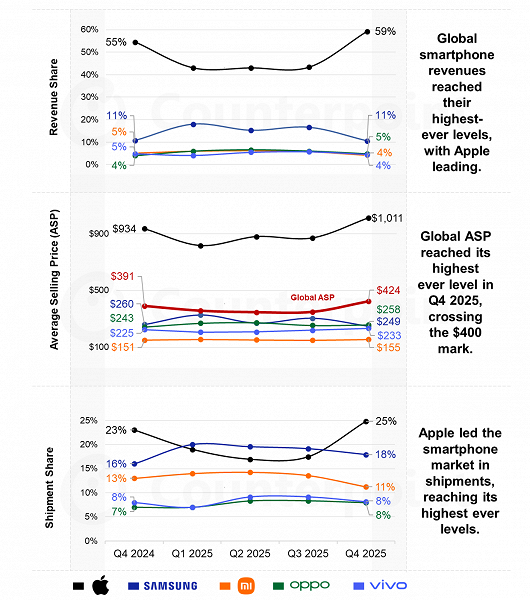 Image: Counterpoint Research.
Apple’s Dominance in 2025
Apple emerged as the undisputed leader of 2025, controlling 57% of the entire market in the fourth quarter. The success of the iPhone 16 and iPhone 17 lines, especially the Pro Max version’s frenzied demand, allowed Apple to increase its revenue by 11% to $76 billion. The integration of advanced AI capabilities and new camera innovations contributed to the allure, further solidifying Apple’s position in the premium segment.
Samsung’s Strategy and Results
Samsung demonstrated the highest unit shipment growth (+17%), although the brand’s average ticket fell by 20%. The South Korean giant bet on the affordable Galaxy A series during the Christmas period, which reduced margins. Nevertheless, the company’s total sales increased by 12% thanks to flagship models like the Galaxy S25 and the foldable Z Fold7.
Chinese Manufacturers: Oppo’s Rise and Xiaomi’s Challenges
Meanwhile, Chinese company Oppo made an impressive leap: the Reno 14 and Find series helped the company increase its revenue by 23%. On the other hand, the situation for Xiaomi was less rosy: both revenue and shipments shrank by approximately 10%. The brand is heavily affected by high prices for DRAM and NAND flash memory, which practically obliterate profits from selling budget models. Current initiatives to diversify supply chains and invest in new memory technologies are underway to counter these challenges.
Future Prospects for 2026
Experts predict that in 2026 smartphones will become even more expensive due to the introduction of new complex artificial intelligence features and the ongoing component shortages. As manufacturers push for further innovation in AI capabilities, privacy features, and sustainable production methods, the competitive landscape will continue to evolve, offering consumers both challenges and new opportunities for advanced technology adoption.