


In late 2025, the global smartphone market crossed a symbolic psychological barrier: for the first time in history, the average cost of a new device exceeded $400, according to Counterpoint Research analysts.
Despite unit sales growing by only 4%, overall manufacturer revenue showed explosive growth. Global smartphone sales revenue hit a record high of $135 billion, indicating the industry’s growth is driven more by the increased cost of each sold gadget than the volume of shipments.
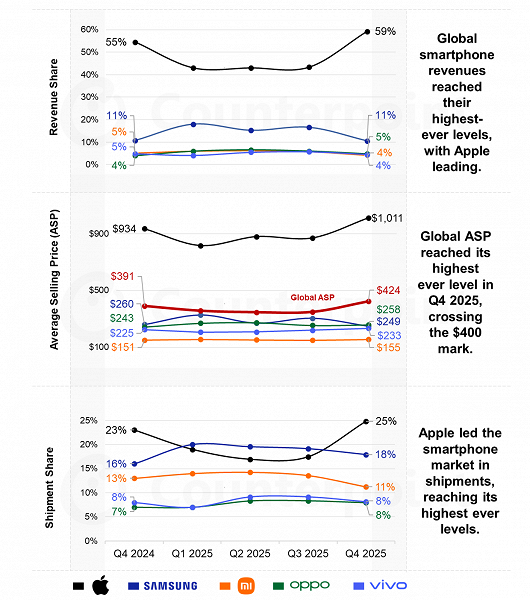
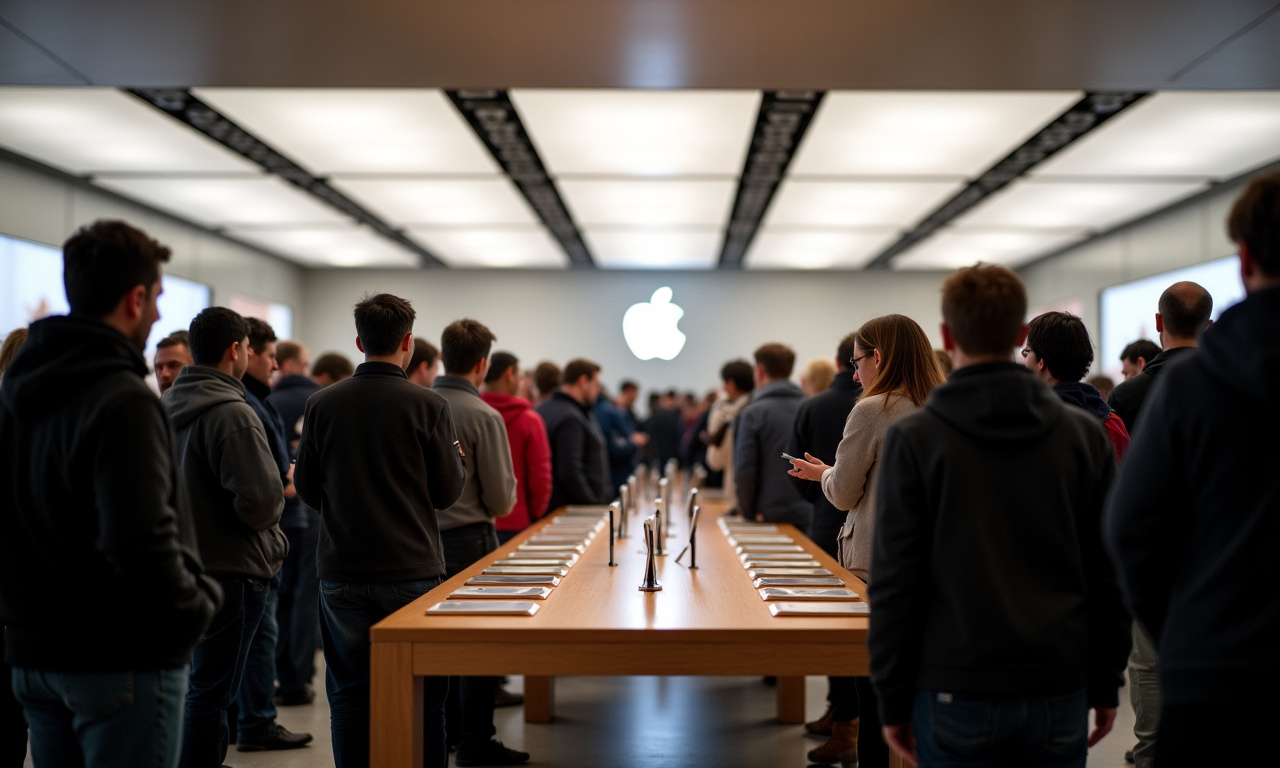
Apple emerged as the undisputed leader of 2025, controlling 57% of the entire market in the fourth quarter. The success of the iPhone 16 and iPhone 17 lines, and particularly the high demand for the Pro Max version, enabled Apple to increase revenue by 11% to $76 billion.
Samsung demonstrated the highest growth in unit shipments (+17%), yet the brand’s average receipt fell by 20%. The South Korean giant focused on the affordable Galaxy A series over the Christmas period, reducing margins. Nonetheless, the company’s overall sales grew by 12% thanks to the flagship Galaxy S25 and foldable Z Fold7. Meanwhile, Chinese company Oppo made an impressive leap: the Reno 14 and Find series helped the company increase revenue by 23%.
The situation was less rosy for Xiaomi: revenue and shipments fell by about 10%. The brand suffers significantly from high prices for DRAM and NAND memory, which practically erase the profits from selling budget models. Experts foresee that in 2026, smartphones will become even more expensive due to the implementation of new complex artificial intelligence features and the ongoing shortage of components.