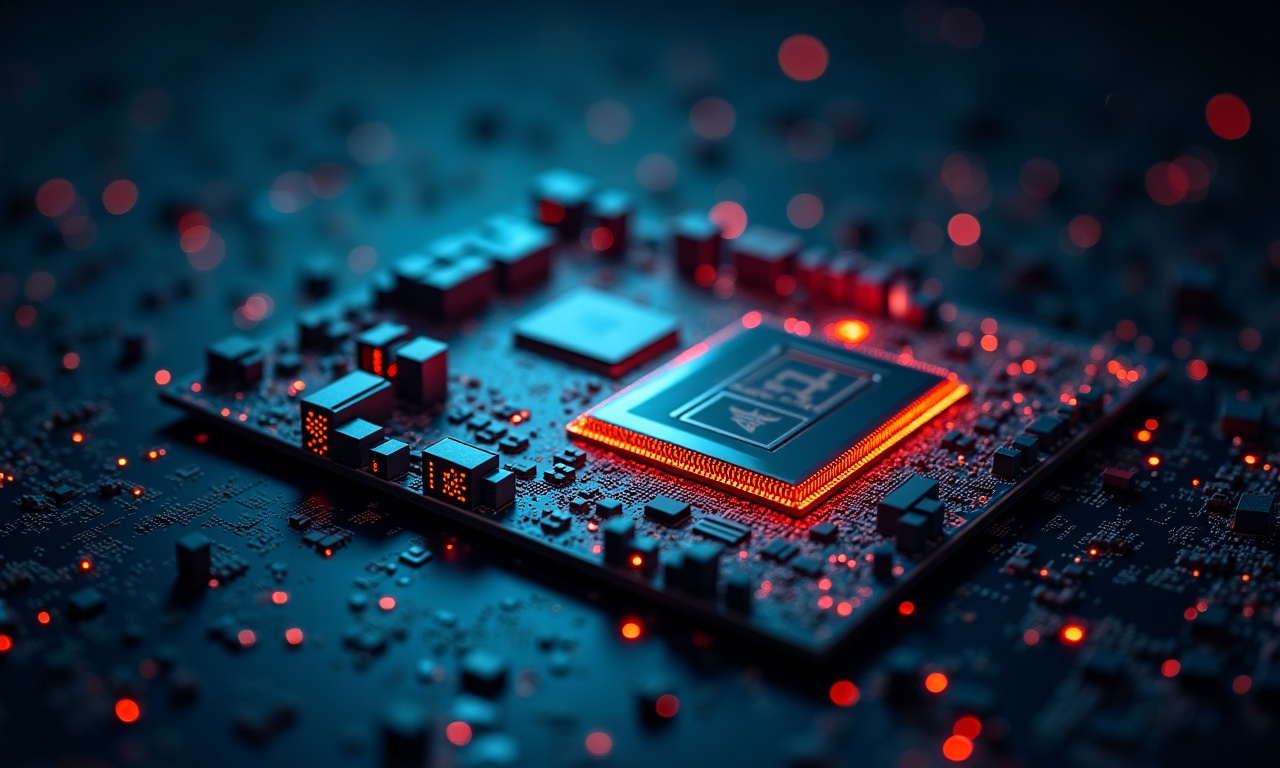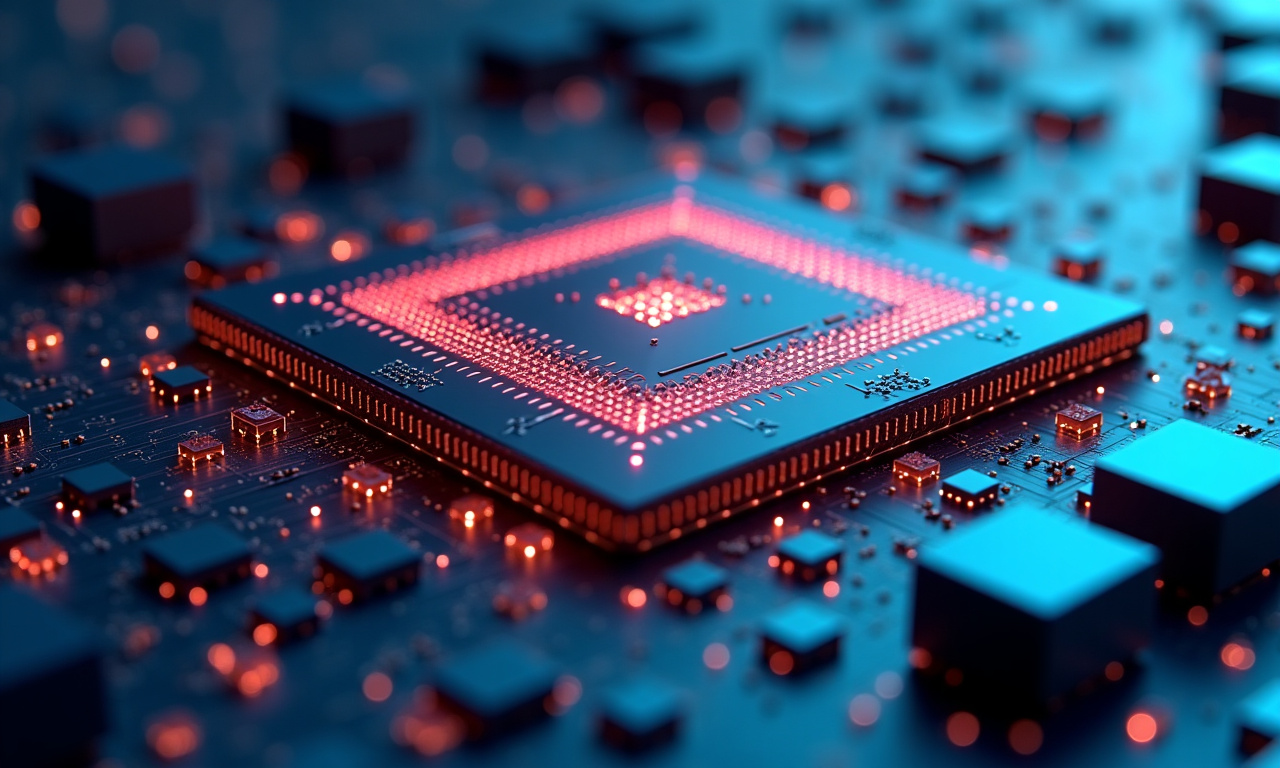

Intel has unveiled an impressive chip consisting of six chiplets and 12 HBM memory stacks, which the company could manufacture right now. This is purely a demonstration solution-the chip is non-functional and has no specifications. It serves to showcase the capabilities of Intel’s current manufacturing processes.
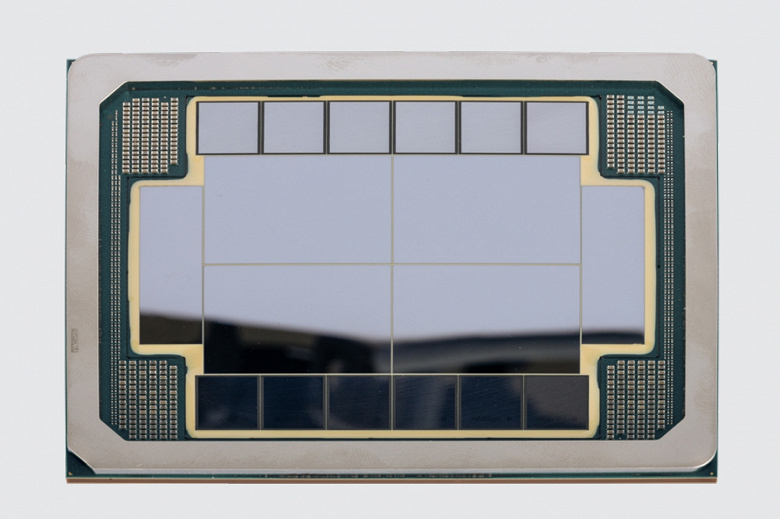
A month ago, the company showcased an even more monstrous chip, but the new demonstration differs in that Intel can produce the exact same functioning chip right now, whereas the previous model was intended to show what the company would be capable of in the near future.
The new chip, which can be called the SiP, has dimensions eight times larger than the area of a photomask. Simply put, it is not even close to possible to create a monolithic die of such size. Although details are scarce, it seems that four main computing chiplets are placed here, manufactured with the 18A process technology (that is, with RibbonFET transistors featuring a circular gate layout and PowerVia backside power delivery), two I/O chiplets typically manufactured using older process technologies, as well as 12 stacks of HBM4 memory. All of it is presumably interconnected via EMIB-T 2.5D technology.
Notably, Intel’s SiP (System-in-Package) technology is gaining attention as it allows integration of multiple chips with advanced interconnects, leveraging EMIB and Foveros technology. This increases performance and reduces power consumption. The use of RibbonFET and PowerVia technologies reflects Intel’s innovation in transistor architecture and efficient power delivery systems, designed to enhance processing capabilities in server and AI-driven environments.
HBM4 memory continues to revolutionize high-performance computing by offering significant bandwidth improvements and energy efficiency. Its integration in servers enhances data throughput essential for AI and data-intensive applications.
Of course, such a complex chip is of no interest in the consumer segment, so Intel is clearly showcasing its capabilities to clients targeting the server market.
The server market is seeing rising demand for systems that support AI, machine learning, and big data processing. Intel’s advancements in chip technology, focusing on efficiency and performance, are directed towards meeting these demands, ensuring competitiveness and optimization for sophisticated computing needs.