



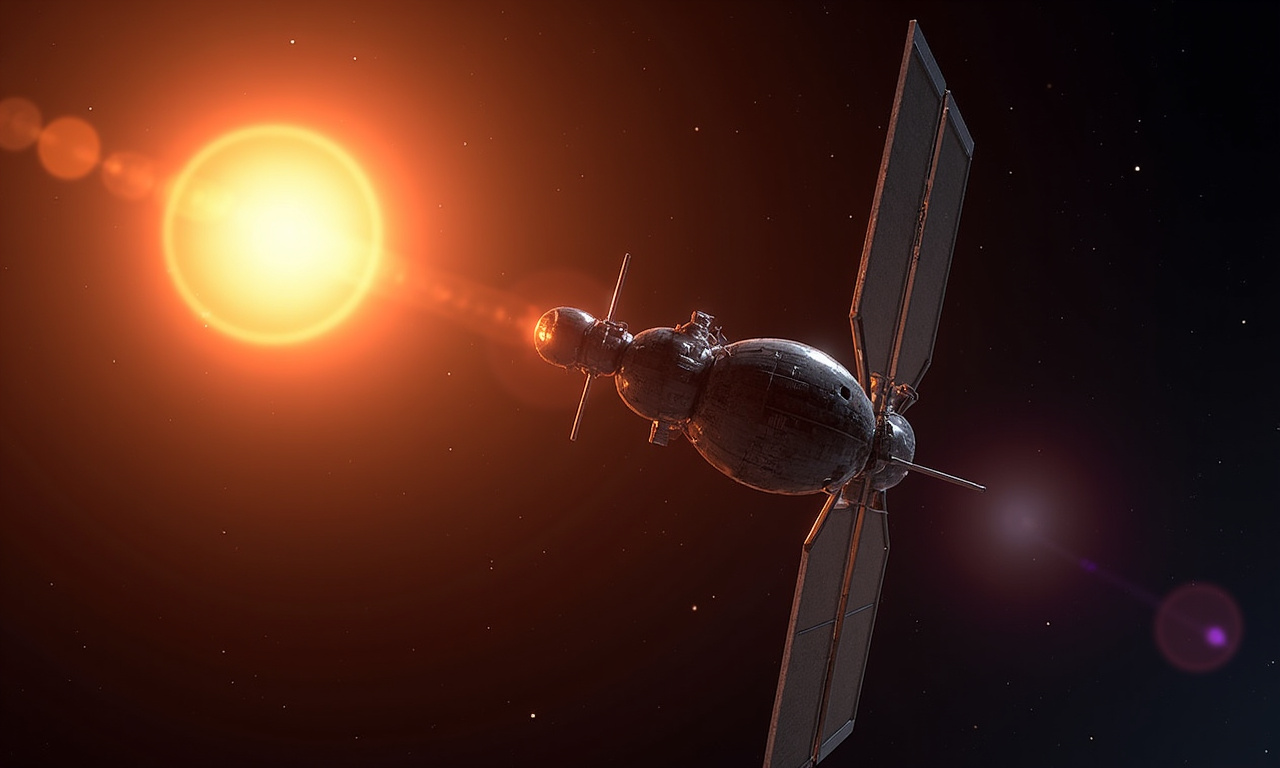

The latest space observatory from the National Oceanic and Atmospheric Administration (NOAA) of the USA, designed to monitor space weather, has reached the Lagrangian point L1. The Space Weather Follow On – Lagrange 1 spacecraft performed a final engine burn on January 23 to reach its destination-about 1.6 million km (994,000 miles) from Earth. After arriving, it was renamed SOLAR-1 (Space weather Observations at L1 to Advance Readiness).
SOLAR-1, launched in September aboard a Falcon 9 rocket, is equipped with a Solar Wind Plasma Sensor, a SupraThermal Ion Sensor, a magnetometer, and a compact coronagraph for monitoring the Sun’s activity and space weather. These advanced instruments provide higher precision and longer operational endurance compared to previous missions such as the DSCOVR satellite, launched in 2015. By offering continuous real-time data, SOLAR-1 aims to greatly improve space weather forecasts and assessments.
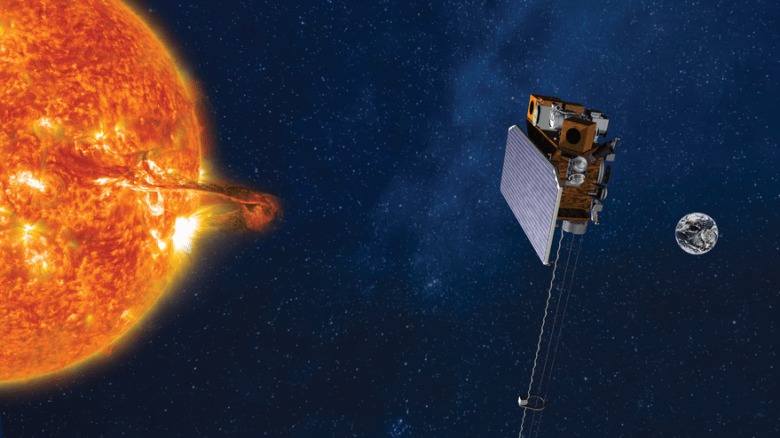
“SOLAR-1, the first American satellite designed exclusively for continuous operational space weather observations, represents a significant step forward in our protection against solar storms,” said Greg Marlowe, NOAA’s Director of Space Weather Observations.
The significance of this mission is underscored by recent solar activity upticks which have raised concerns over potential impacts on Earth, particularly on communication and navigation systems. Experts from NOAA highlighted that SOLAR-1 would provide unprecedented support to mitigate these impacts, an enhancement eagerly anticipated by the scientific community.
SOLAR-1 is expected to commence operations in the spring following instrument checks and validation. NOAA plans to integrate data from SOLAR-1 into their existing models, providing a more comprehensive understanding of the interactions between solar phenomena and Earth’s magnetic environment. Given the evolving nature of space threats, SOLAR-1’s data will be crucial for businesses and government agencies reliant on satellite communications and GPS technology.