




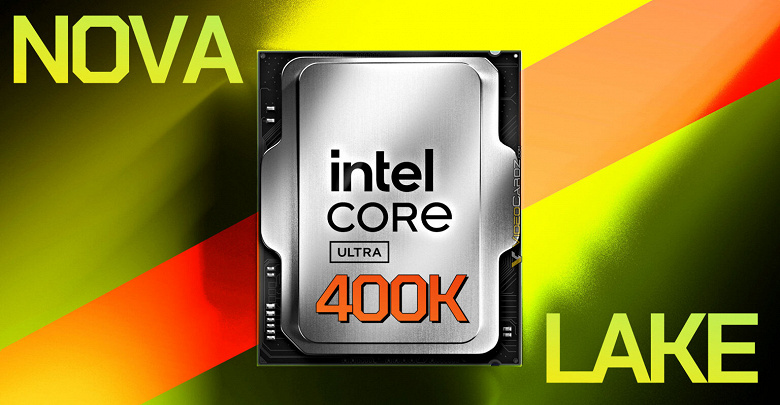
Intel’s Chief Lee-Bu Tan officially confirmed that the next generation of consumer-grade processors, Nova Lake (Core Ultra 400), will be launched at the end of 2026. These CPUs will replace Arrow Lake in desktop PCs (Nova Lake-S) and Panther Lake in laptops.
Recent data reveals that Nova Lake processors will introduce novel core architectures: high-performance P-Cores known as Coyote Cove and energy-efficient E-Cores called Arctic Wolf. Flagship models will boast configurations of up to 52 cores and include an updated neural processor. Graphics will be managed by an integrated Xe3 architecture GPU. A standout innovation is the Big Last Level Cache (BLLC) technology, Intel’s direct response to AMD’s highly successful X3D technology. BLLC is designed to reclaim Intel’s leadership in the gaming CPU segment.
In addition to architectural enhancements, users will experience a platform transition. It’s anticipated that Nova Lake-S desktop processors will move to the new LGA-1954 socket. Although the size of the socket may remain similar to LGA-1851, theoretically allowing older cooling systems to be reused, a new motherboard purchase will be obligatory with the new CPU.
The introduction of BLLC is particularly impactful, as it aims at eliminating latency issues and providing smoother gameplay experiences compared to current offerings. Experts predict that by end-2026 and into 2027, the gaming CPU landscape will experience a shift as consumers compare these innovations with AMD’s recent RDNA 3 GPUs. Market analysts note that this rivalry could heat up developer competition, pushing for even greater performance benchmarks in gaming.