







Rocket Lab has reported damage to a fuel tank designed for the first stage of its Neutron rocket during qualification tests. The incident occurred during a hydrostatic test, where the tank is filled with water and pressurized beyond its normal limits to check for leaks and structural integrity. “Failures during qualification testing are not uncommon. We intentionally push structures to the brink to confirm the structural integrity and safety margins needed for successful launch,” the company stated.
While such incidents are anticipated during testing, Rocket Lab is assessing its impact on the Neutron development schedule.
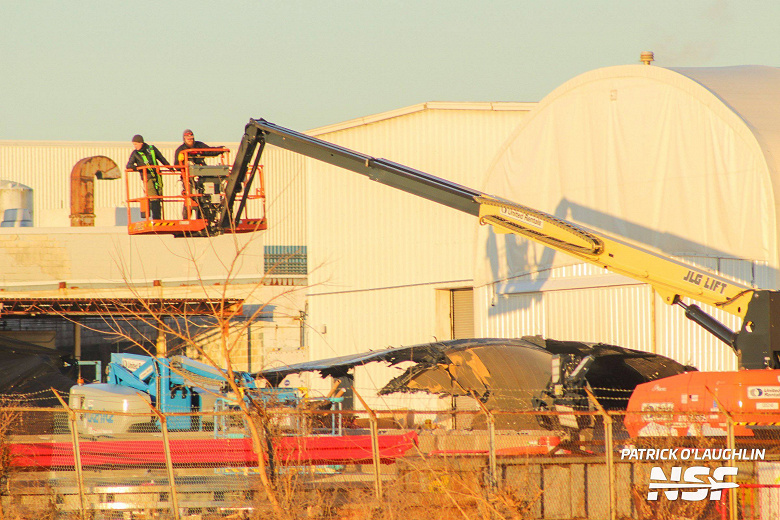
According to company representatives, the testing structure or facilities sustained no significant damage. A new first-stage tank is already in production, and Neutron development continues. More detailed information will be provided during the next financial results conference in February.
Observers noted destruction of the tank outside Rocket Lab’s facility in Middle River, Maryland, where Neutron structures are built. Initially, it was unclear whether the damage was intentional or accidental. Neutron is a reusable medium-class launch vehicle being developed by Rocket Lab. Its launch will take place from Launch Complex 3 on Wallops Island, Virginia, completed by the company in August 2025. Neutron’s payload capacity is up to 8 tonnes to low Earth orbit.
The first stage is equipped with seven Archimedes engines running on liquid methane and liquid oxygen. During the inaugural launch pad opening, Rocket Lab expressed plans for Neutron’s first launch by the end of the year. However, in November, the company announced the postponement of the first launch to 2026, noting the rocket will be installed at the pad in the first quarter, with the launch occurring later.
Rocket Lab’s expansion into reusable rockets with Neutron aims to diversify its launch capabilities and compete with industry leaders like SpaceX. Despite the complications in testing, the reusability concept is strategically aligned with industry trends toward cost-effective and sustainable satellite deployment. Successful integration in Rocket Lab’s operational schedule could redefine competitive dynamics within the space industry.