




Nex Computer’s Ambitious Leap with NexPhone
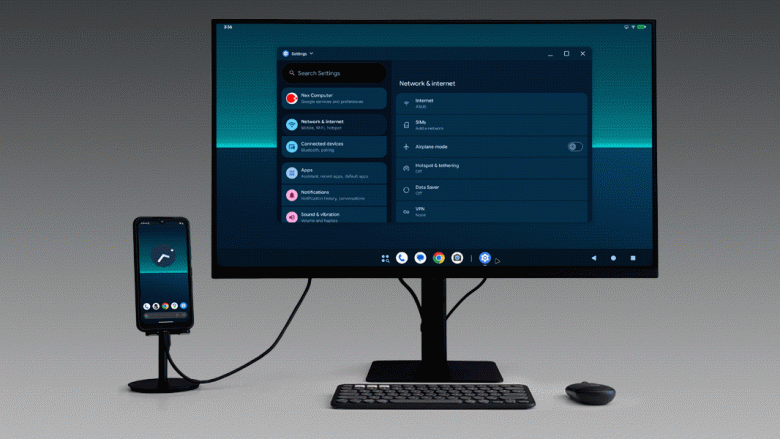
The company Nex Computer, renowned for its NexDock docking stations, has announced the NexPhone smartphone. The device is set to blur the lines between phone and computer, with its standout feature being the inclusion of three pre-installed operating systems. Out of the box, the smartphone runs on Android 16 with a proprietary NexOS interface, but when connected to a USB-C monitor, it can load Windows 11 (Arm version) or Linux (Debian). Furthermore, Linux can also function as a standalone application directly on the smartphone screen.
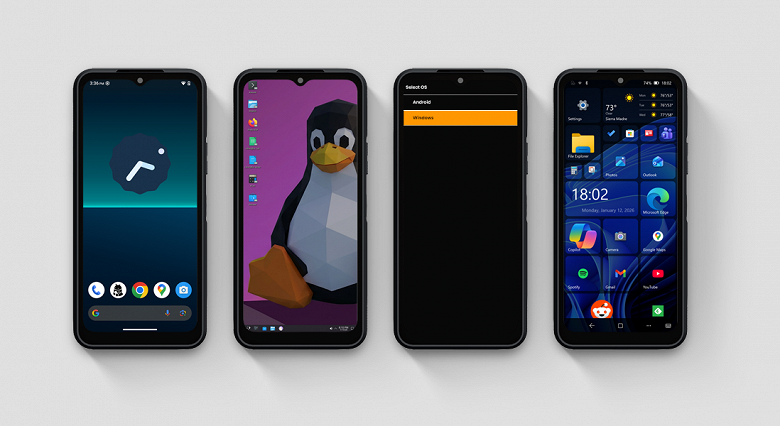
Technical-wise, the NexPhone is a typical mid-range model. It is built on a 6-nanometer Qualcomm QCM6490 SoC (essentially the same Snapdragon 778G, meaning it’s an old platform). The RAM capacity is 12 GB, and built-in flash memory is 256 GB, with a microSD slot available for expansion. The screen features a 6.58-inch IPS panel, Full HD+ resolution, a frame rate of 120 Hz, and protection in the form of Gorilla Glass 3.
The main camera consists of two modules with sensors having a resolution of 64 MP (Sony IMX787, part of the main module) and 13 MP (part of the ultra-wide-angle module). The front camera boasts a 10.5 MP resolution. The body is protected according to the IP69 rating. The battery capacity is 5000 mAh, supporting 18-watt wired charging and wireless charging.
Priced at $550, NexPhone is available for pre-order with a $200 deposit, with deliveries scheduled for the third quarter of 2026.
Future Market Impact of NexPhone
With the rise in ARM architecture adoption and the competitive landscape of devices supporting multiple operating systems, NexPhone’s strategy could position it significantly in a niche market. Recent trends indicate an increasing consumer interest in modular and versatile technology solutions, making the NexPhone’s multi-OS feature particularly appealing.