



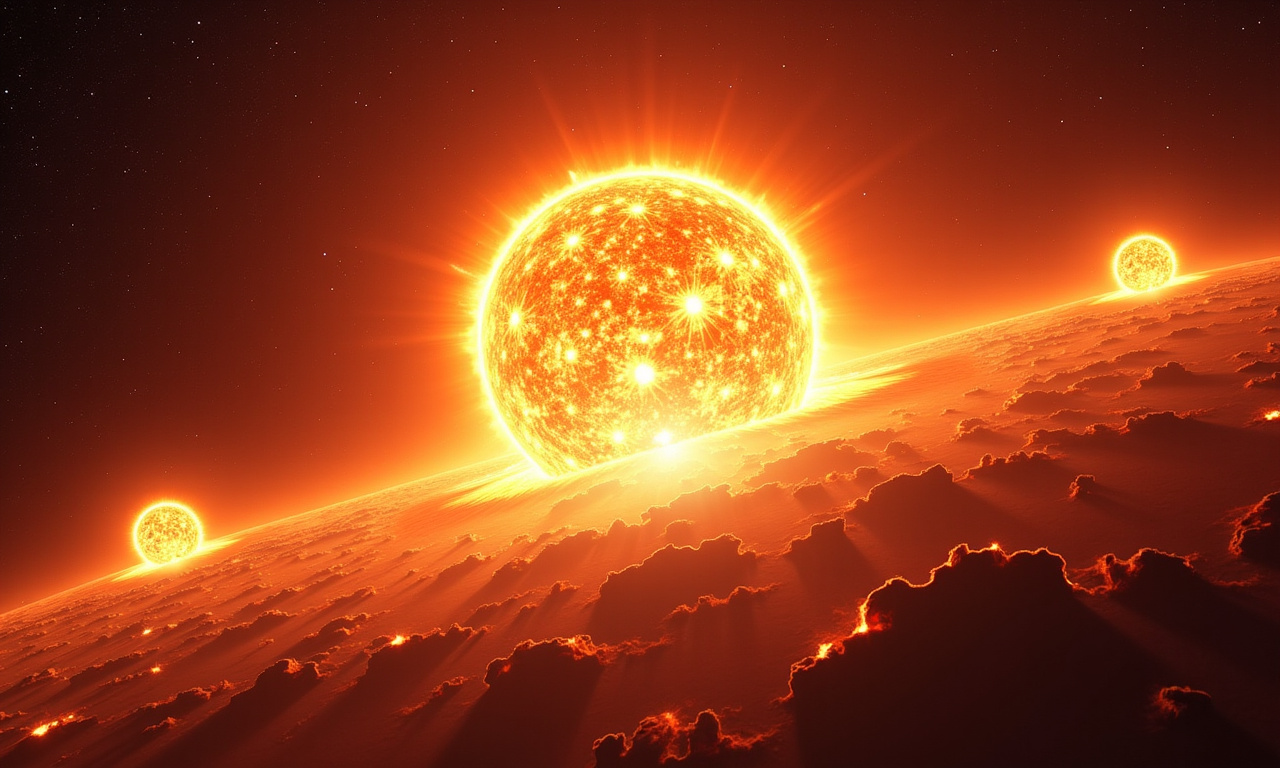

Experts from the National Oceanic and Atmospheric Administration (NOAA) announced a Critical Weather Day (CWD) until 9 AM Moscow time on January 20. This declaration came as a result of witnessing a simultaneous radiation storm of level S3 and a projected geomagnetic storm of level G4 or potentially stronger. Such events have the capacity to affect the operation of satellites, power systems, and radio communications, while also creating hazardous conditions for flights at high latitudes.

The Laboratory of Solar Astronomy at the IKI and NISF has released a forecast indicating that January 20 will be an exceedingly tense day concerning magnetic storms. Previously reported was the mass arrival of accelerated protons to Earth’s orbit, causing a ‘snow storm’ effect on space telescope images. Scientists have confirmed that yesterday’s powerful maximum-class solar flare, X1.95, has directed a plasma ejection right at Earth. The hazard level for spacecraft and the issuance of warnings exceeded the threshold nearly 200 times, making this event the most intense in the entire 25th solar cycle.
The impact of these solar activities is already causing concern across several sectors, especially in communication lines and aviation. As noted by Dr. Emily Fletcher from the Space Weather Prediction Center (SWPC), “This is a vivid reminder of the sun’s potential influences on our technological infrastructure.” Her sentiments echo growing discussions on the need for better shielding technologies for satellites.
Currently, there is a rush among scientific communities to analyze the data further, while industries connected to satellite operations brace for possible disruptions. Future forecasts suggest that though these solar disturbances are periodic, their increased intensity during this cycle could lead to more frequent alerts.