





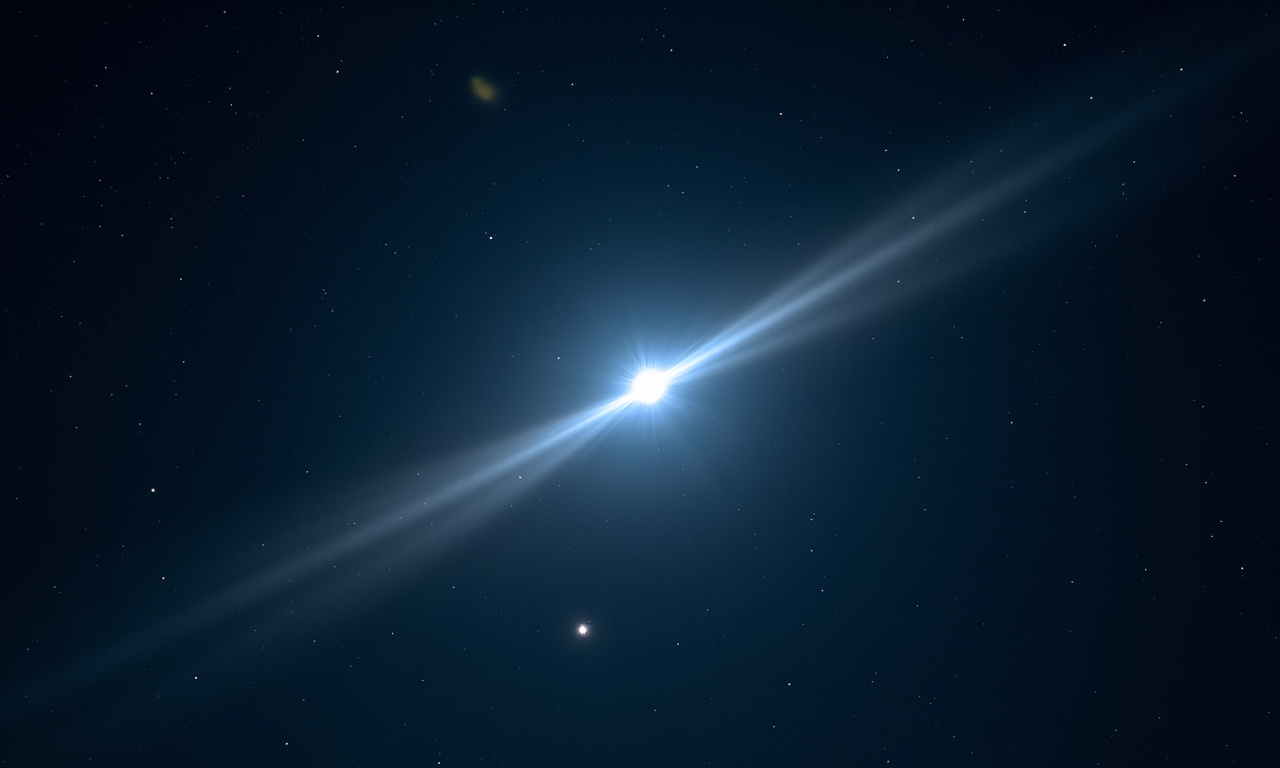

Astronomers have discovered a new comet, which may be a member of the Kreutz family-a group of the brightest comets whose orbits take them extremely close to the Sun. Initially designated as 6AC4721, this celestial body was first observed on January 13. If its membership to the Kreutz family is confirmed, it would be an unprecedented discovery. The Kreutz family comets are fragments of a giant comet that disintegrated centuries ago upon approaching the Sun. They all travel on similarly elongated orbits and return to the inner Solar System once every few centuries. Astronomers have long awaited the appearance of such an object.
The last bright member of this family was C/2011 W3 (Lovejoy), which in 2011 became an impressive spectacle for observers in the Southern Hemisphere and subsequently disintegrated after perihelion passage. Prior to that, in 1965, Comet C/1965 S1 (Ikeya–Seki) reached a brightness of -10 magnitude (the smaller the magnitude, the brighter the object). By comparison, Comet Lovejoy reached a peak brightness of -1 magnitude.
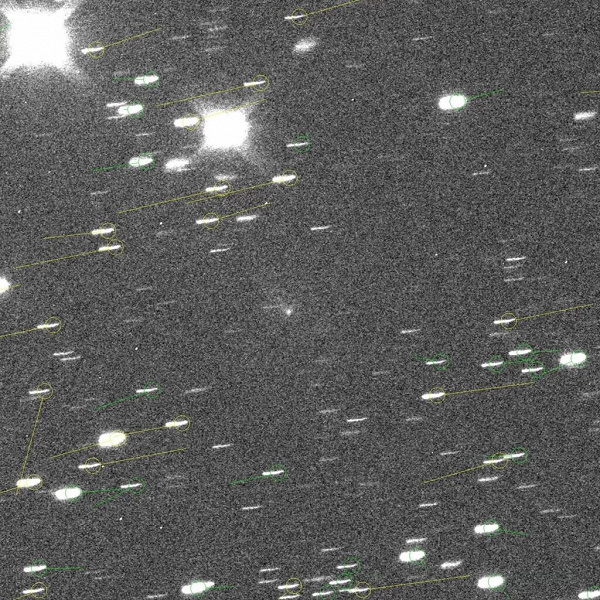
The object is currently registered at the Minor Planet Center as a “possible comet.” Current images show a diffuse coma and a small tail, so confirmation of comet status is expected soon. The object is likely to receive the official designation C/2026 A1. Initial orbit calculations show that the potential comet is highly inclined to the plane of the Solar System-at 144°. This is typical for Kreutz family comets. Its location in the constellation Caelum in the Southern Hemisphere also suggests an origin from the Sirius area, known as the aphelion of this group of comets.
What’s most interesting is that the current heliocentric distance of the comet is 2 astronomical units (AU) from the Sun. Never before has a Kreutz comet been detected so far from the Sun. To be bright enough for observation, the object must be large, and its brightness could significantly increase in the coming weeks. On archival images taken in December, the comet had a brightness of about +20 magnitude, which remains currently.
At the point of closest approach to the Sun on April 5, it will be just 0.021 AU from the Sun, and its elongation will measure only 0.5° (the width of the full Moon). During this time, the comet might even become visible during the day, as was the case with Comet Ikeya–Seki.