


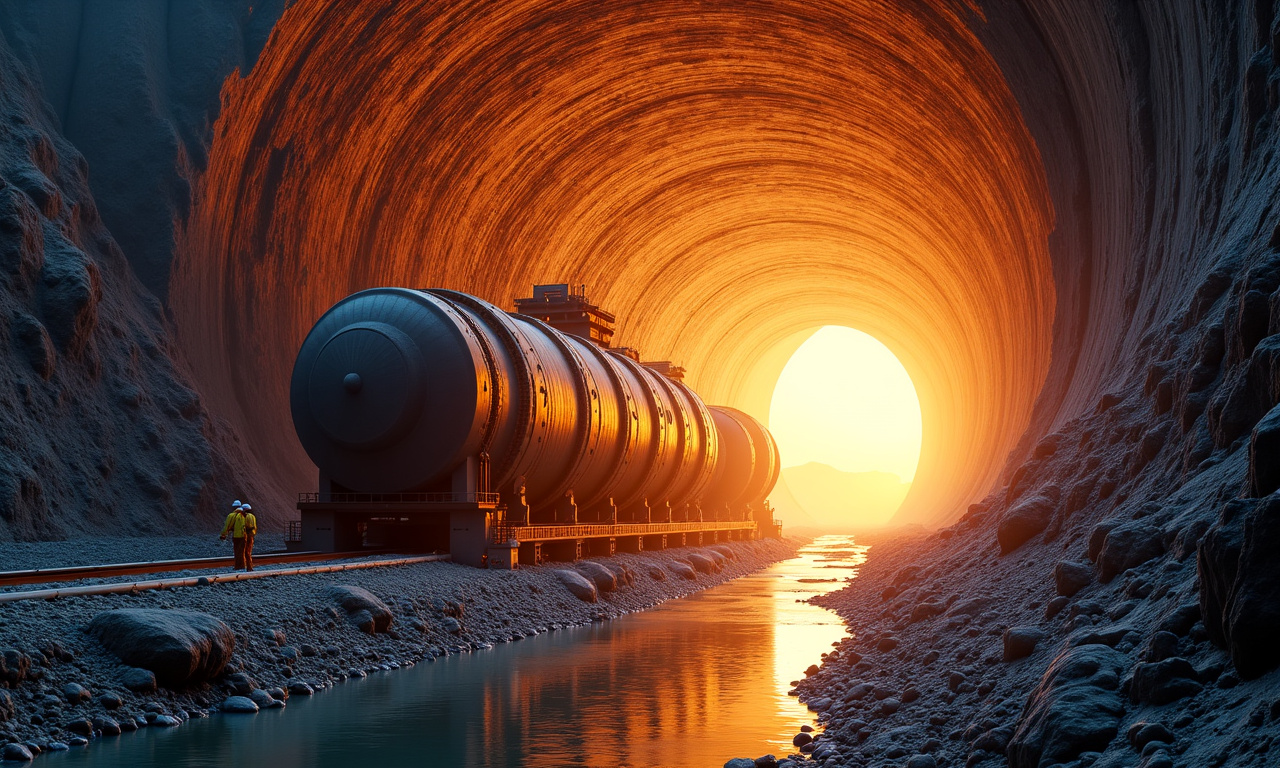

Chinese engineers have successfully resumed the construction of a vehicle tunnel beneath the Yangtze River by executing an unconventional solution to rescue a stuck Tunnel Boring Machine (TBM). The TBM, halted at a depth of approximately 54 meters, was salvaged using a second identical machine launched from the river’s opposite bank. The incident occurred during the construction of the Jiangyin-Jingjiang road tunnel, spanning around 6.4 kilometers under the Yangtze’s riverbed. One of the largest TBMs in its class, measuring 16 meters in diameter, was employed for the task. The operation proceeded smoothly until the machine broke down in an area with soft, waterlogged soils under high hydrostatic pressure.
Stranded deep beneath the river, the TBM could neither retreat nor be safely dismantled, and on-site repairs proved technically infeasible. The project team faced a choice between scrapping the costly equipment and effectively shutting down the project or attempting a fundamentally different solution.
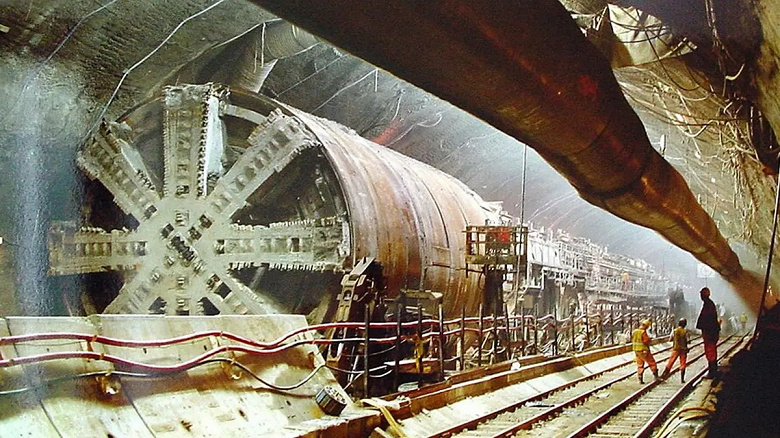
Engineers decided to launch a second TBM from the opposite bank, guiding it precisely to the stranded machine. This task required predicting ground deformations under the large river and navigating over kilometers with millimeter precision. The permissible margin of error, both vertically and horizontally, was thinner than a coin, as any deviation could lead to a collapse or water breakthrough.
The operation was executed successfully. Reports indicate a vertical error of merely 2 millimeters, with horizontal displacement being practically zero. The two TBMs met underground amidst high pressure and water-saturated sedimentary rocks- a mid-tunnel docking procedure deemed one of the most complex operations in underground construction. This connection enabled engineers to access the damaged machine, regain control of the situation, and continue the tunnel’s construction without cancellation or radical project redesign. The project was preserved, avoiding years of delays and financial loss.
Recently, China’s infrastructure projects have been leading the world in both scale and innovation. The experience gained from the Yangtze River tunnel has bolstered their expertise, expanding capabilities in constructing challenging underwater tunnel systems, an area where China’s adeptness is becoming globally recognized.