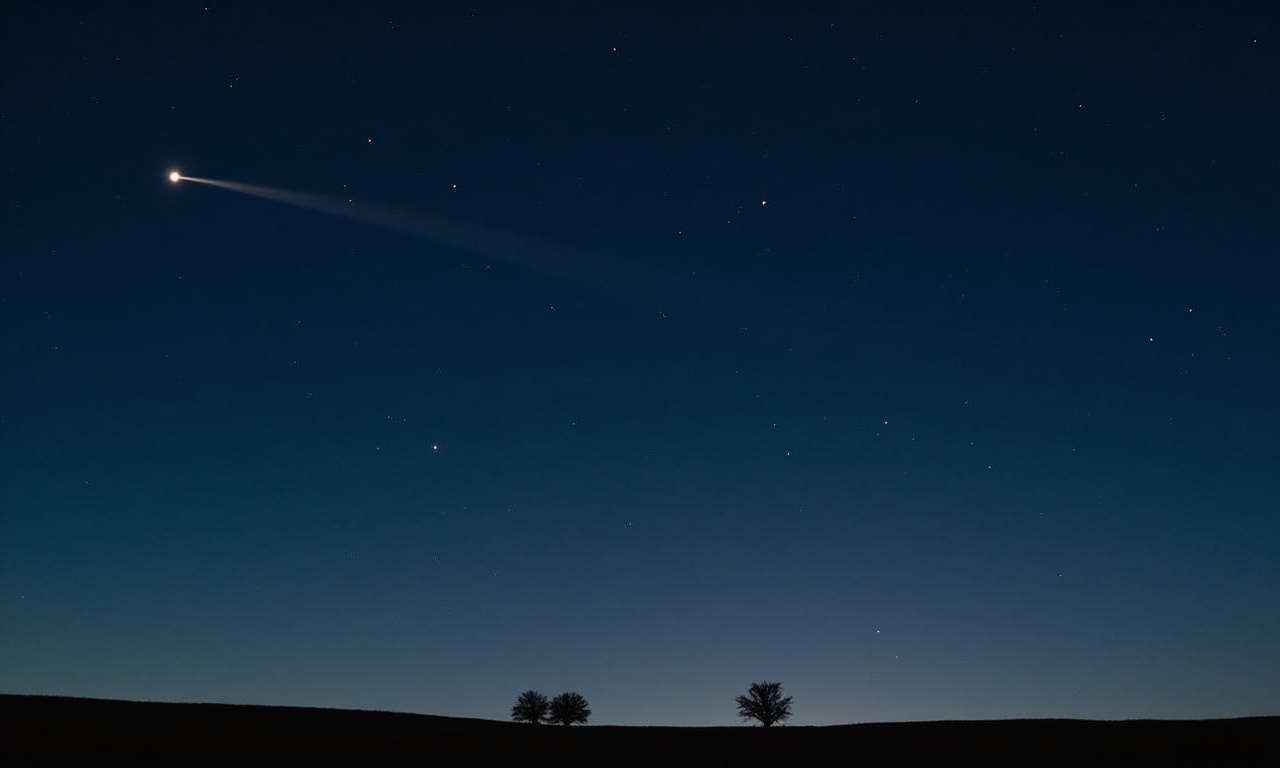

On January 8, at 11:10 Moscow time, comet 24P/Schaumasse will reach its perihelion – the point in its orbit closest to the Sun (the distance will be 110 million miles). This was reported by senior research fellow at the Institute of Applied Astronomy, Nikolai Zheleznov. 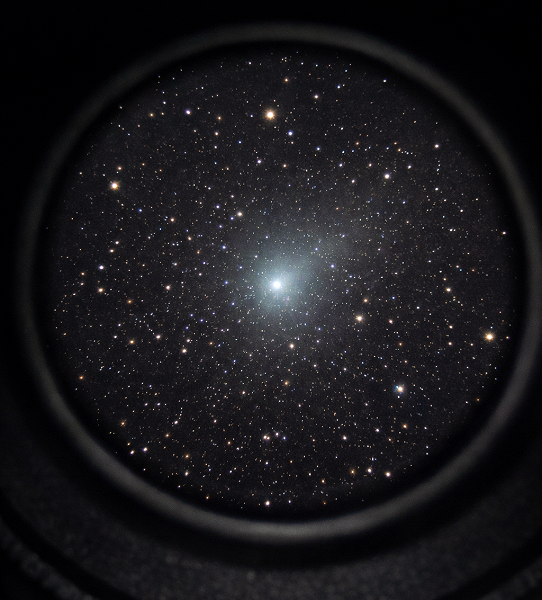 Earlier, on January 4, the comet came closest to Earth (55 million miles). Currently, the celestial body has a brightness of 8th magnitude and is available for observation through amateur telescopes.
Comet 24P/Schaumasse is a periodic comet of the Solar System. It was discovered in 1911 by French astronomer Alexandre Schaumasse. The orbital period is approximately 8.3 years.
Visibility in Amateur Telescopes and Recent Discoveries
For enthusiasts, catching a glimpse of 24P/Schaumasse this year is a noteworthy event. As it brightens to the 8th magnitude, those equipped with telescopes can expect a decent view, weather permitting. This event offers a rare opportunity to observe a comet with such a storied history.
In recent years, technological advancements have improved our capabilities in observing periodic comets. Enhanced high-resolution imaging, alongside improved digital processing methods, allows amateur astronomers to contribute to the broader field of comet study. Furthermore, new developments in predictive modeling aid in calculating precise paths and potential changes in comet orbits, enabling more accurate public forecasts.