



Chinese physicists at the EAST tokamak (Chinese Academy of Sciences) have experimentally surpassed a fundamental limitation in nuclear fusion – the so-called Greenwald limit. Scientists managed to produce and maintain plasma with a density exceeding this limit by 1.3–1.65 times while preserving its stability.
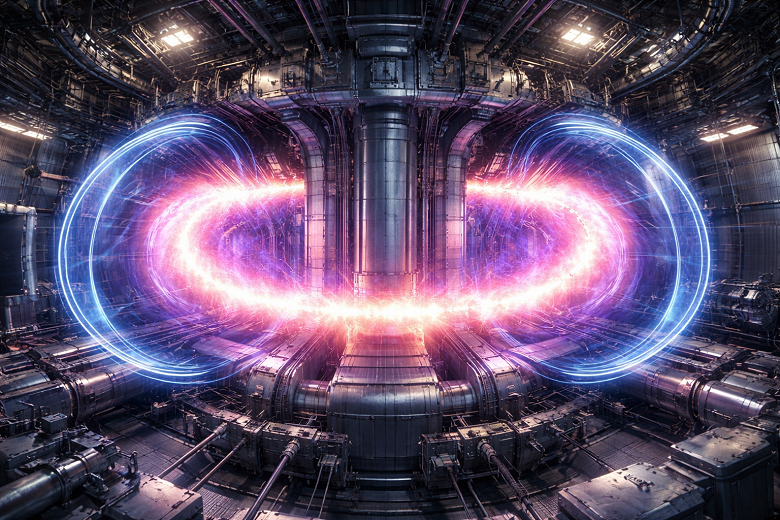
Researchers employed a new plasma heating method borrowed from stellarators (another type of reactor) and also optimized the distance between the plasma column and the reactor walls. This combination allowed them to slow down particle exchange between the plasma and the divertors (the cleaning system), preventing the destruction of magnetic confinement.
The achievement by Chinese scientists paves the way for creating next-generation nuclear fusion reactors capable of sustaining self-supporting plasma burn. The new heating technique, coupled with advancements in material sciences and magnetic containment, provides a promising outlook for sustainable fusion energy.
Recent developments indicate that China plans to further develop this technology, with enhancements expected in plasma heating efficiency and containment stability, positioning them as a leader in the global race for clean nuclear fusion power. Researchers worldwide are watching closely, as this breakthrough might signal a turning point in fusion technology, reminiscent of the ITER project’s anticipatory hopes.