
Innovative Energy Storage: CO2-Based Solutions in Sardinia
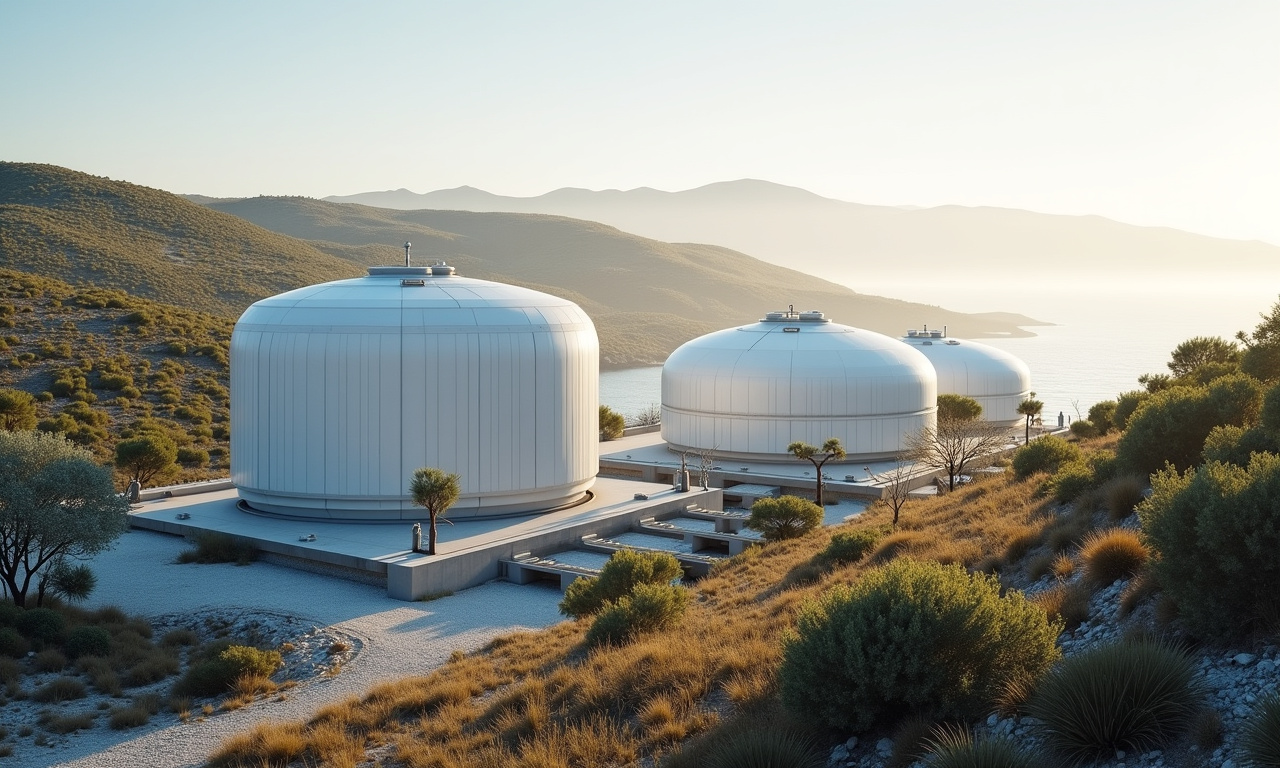
In Sardinia, an innovative energy storage system that utilizes carbon dioxide is being tested. The principle of operation is simple: when there is an excess of energy, for instance, from solar panels or wind turbines, CO2 is compressed, cooled, and liquefied. The resulting liquid is stored in pressurized tanks. When energy is required, the compressed CO2 is passed through a turbine that generates electricity. To avoid CO2 emissions into the atmosphere, the gas is stored in a reservoir, awaiting the next charging cycle.
Supported in part by Google, the test project boasts a gigantic “sack” that contains 2000 tons of CO2 and can produce 20 megawatts of electricity for 10 hours.
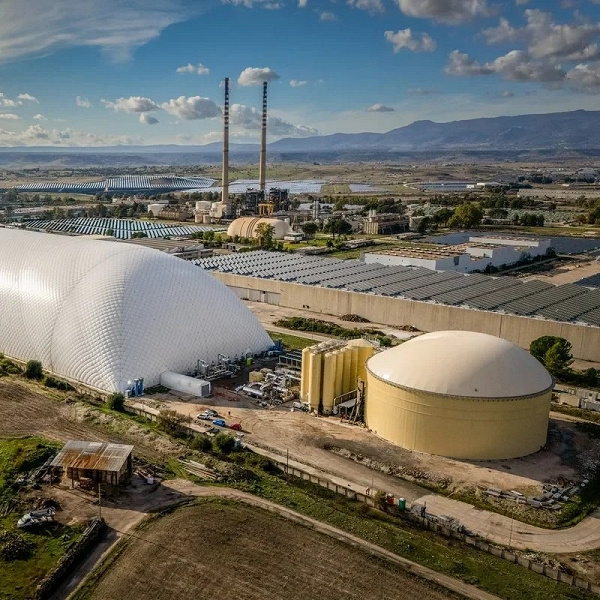
Although running for only 10 hours might not seem impressive, it suffices for nighttime use, and the system is scalable. The turbine capacity is 20 MW, and to increase capacity, only additional land is required. The pilot installation with a capacity of 200 MWh occupies five hectares. Unlike pumped-storage hydroelectricity, this technology does not require specific terrain. Moreover, the 10-hour storage is significantly longer than the typical 6-8 hours that battery systems are designed for. Currently, only one such installation is in operation, but scaling is anticipated.
Future Developments and Global Expansion
In 2026, Energy Dome, the developer of the Sardinian project, plans to implement this energy storage system in India and Wisconsin, USA. Google also intends to use this technology in its data centers worldwide, although details of the agreement have not been disclosed. Previously, various energy storage methods, from liquid tin to electric vehicle batteries and even large gravel heaps, were considered. The CO2 method has several advantages over other solutions, and, in the worst-case scenario, it will not burn for several days like some types of batteries.
The release of 2000 tons of CO2 might not be as harmless as a liquid air battery accident, but storing liquid CO2 under pressure is far simpler than cryogenic air.
Broader Implications and Future Prospects
CO2-based energy storage solutions have been gaining traction as they offer a versatile and environmentally-friendly method for managing energy supply and demand. With minimal environmental impact, these systems provide a scalable solution to energy storage challenges currently faced by the renewable energy industry.
Globally, energy storage companies are focusing on innovations that do not require unique geographical features, making them ideal for a wide range of applications. As technology continues to develop, CO2 systems are poised to play a crucial role in the global energy landscape, with companies like Energy Dome leading the charge in new regions. In parallel, the focus remains on expanding capabilities and reducing costs to make this a viable solution for diverse energy needs worldwide.