
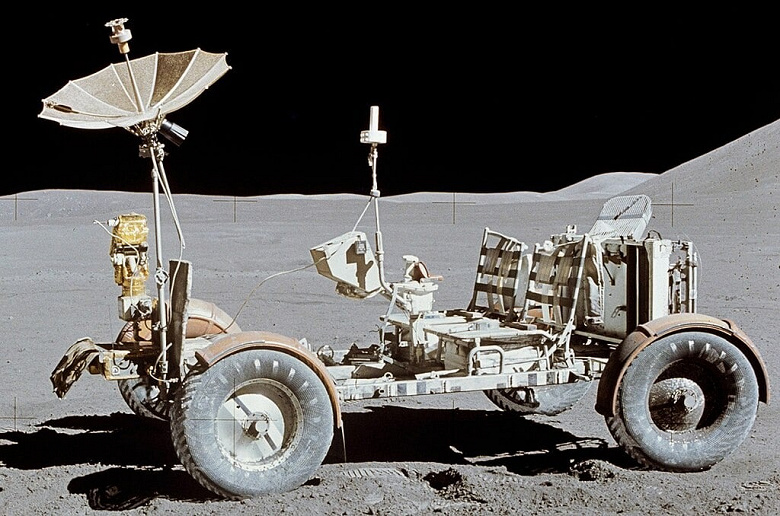
Lunar dust, a serious issue since the Apollo missions, has once again captured scientists’ attention as preparations to return humans to the Moon ramp up. The fine particles of regolith easily rise and adhere to equipment, damaging helmet visors, seals, and device surfaces. Researchers from the Beijing Institute of Technology, the China Academy of Space Technology, and the Chinese Academy of Sciences have presented a detailed theoretical model describing the behavior of charged lunar dust during low-velocity collisions with spacecraft. Their study meticulously considers the Moon’s electrical conditions. During the day, the Sun’s ultraviolet and X-ray radiation knocks electrons out of the regolith and apparatus surfaces, giving them a positive charge and forming a photoelectron sheath. At night, the situation changes: surfaces and equipment accumulate electrons from the surrounding plasma and become negatively charged, forming a “Debye sheath” (an area of electric field screening in plasma). An additional impact is brought by the solar wind, constantly delivering charged particles. In these conditions, approaching dust particles experience multiple influences. The electric field’s force acts on the dust particle’s charge and can either attract or repel it. The dielectrophoretic force arises from the distortion of the non-uniform electric field around the particle and directs it to a region with a stronger field regardless of the charge’s sign. A third factor is the attraction caused by an induced opposite charge on a conductive surface.
The model shows that at the very contact, non-electrostatic effects often play a decisive role, namely Van der Waals adhesive forces – weak intermolecular interactions, especially noticeable in the slow impacts typical of lunar operations. The collision passes through three stages: initial elastic deformation with increasing attraction forces, possible coating deformation with energy loss, and an unloading phase where the particle either bounces off or sticks if the speed falls into a critical range. The authors demonstrated that under typical lunar surface conditions, dust surface charge density is more crucial than the spacecraft’s electrical potential. When the charge density is below 0.1 millicoulombs per square meter, adhesive forces during contact exceed electrostatic ones. Meanwhile, thick dielectric coatings with low dielectric permittivity (the material’s ability to store an electrical charge) can significantly weaken the dust attraction even before impact. The practical conclusion of the work lies in material selection recommendations: coatings with low surface energy and rough textures reduce the likelihood of adhesion, while larger particles often bounce off due to a higher restitution coefficient. The model also identifies a narrow range of speeds where negatively charged particles are most prone to adhesion. According to the authors, these results can be used for predicting dust accumulation, selecting protective coatings, and designing dust removal systems, which is becoming increasingly relevant against the backdrop of developing scenarios for lengthy and complex lunar missions.
With the upcoming NASA Artemis missions aiming for a mid-2020s human return to the Moon, urgency heightens for innovative solutions to combat lunar dust challenges. These missions spotlight vital advancements in material science that could offer effective remedies against dust issues. Additionally, collaborations by the European Space Agency (ESA) with international partners explore technologies to ultimately mitigate lunar dust interference, emphasizing developments in dust-repellent materials and electrostatic dust sweeping systems.
Moreover, the renewed interest in lunar mining, particularly for Helium-3 and rare earth metals, accentuates the significance of handling lunar dust. The potential of Helium-3 as a nuclear fusion fuel holds transformative implications for Earth’s energy sectors and underscores the need for dust management to improve mining operations’ effectiveness and feasibility.