


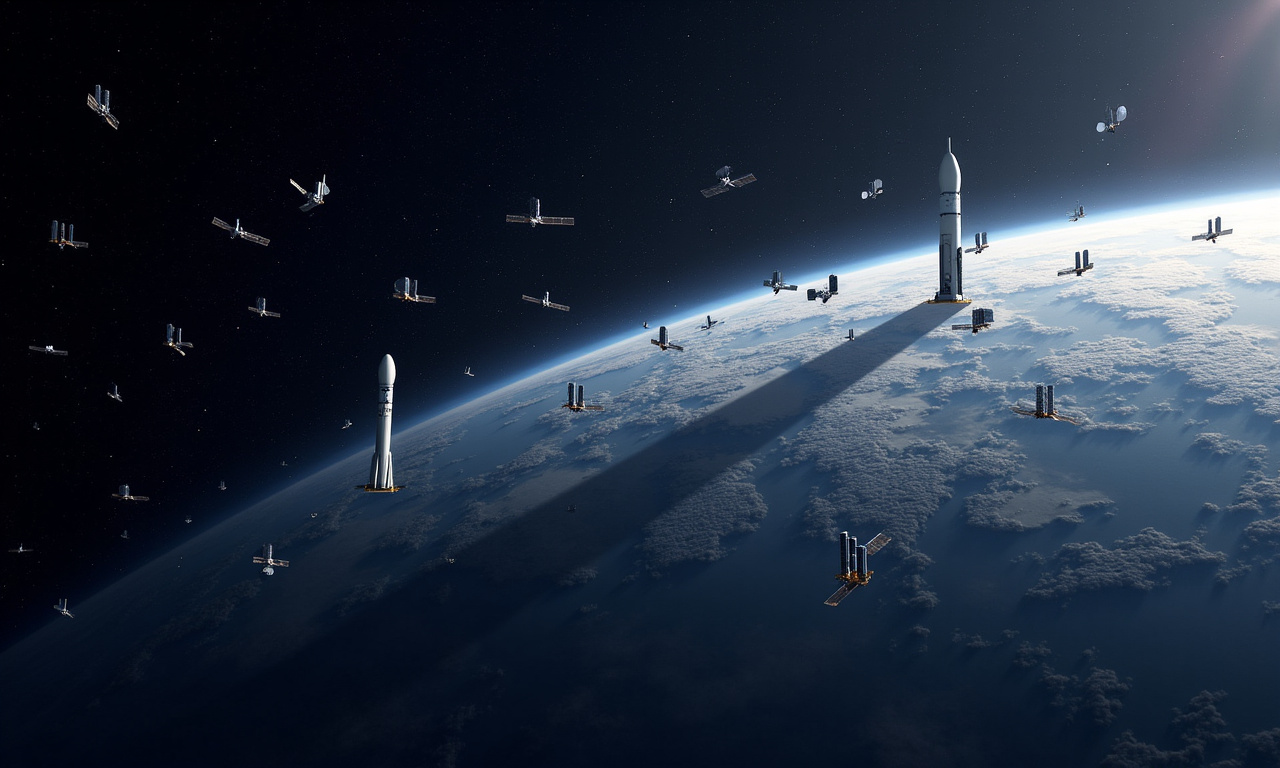

In 2025, countries across the globe launched 4,499 satellites into orbit, marking an increase of approximately 1,700 space vehicles compared to the previous year. Once again, the primary growth driver was SpaceX. Its Starlink system accounted for 3,160 launched satellites, representing 70% of the total number of new space vehicles for the year. Essentially, Starlink is forming the main segment of modern orbital constellations, setting the pace for the entire satellite launch market.

Among the remaining satellites, most are also linked to the United States-whether directly, or through manufacturing for foreign clients. Chinese “citizenship” was bestowed upon 369 satellites, with another 91 spacecraft built in Russia. Other countries, which are quite numerous, were limited to launching from several dozen satellites to one or two vehicles.
The rapid increase in satellite launches has significant implications for the global telecommunications market, enhancing global internet connectivity and enabling advanced communication services. However, this boom also underscores the growing challenge in space traffic management, as more satellites mean increased risks of collisions and space debris.
Advancements in satellite technology have considerably improved the efficiency and capacity of these modern spacecraft. Innovations such as miniaturization, enhanced propulsion systems, and improved onboard processing have played key roles in this surge, allowing for more versatile and cost-effective satellite deployment.