

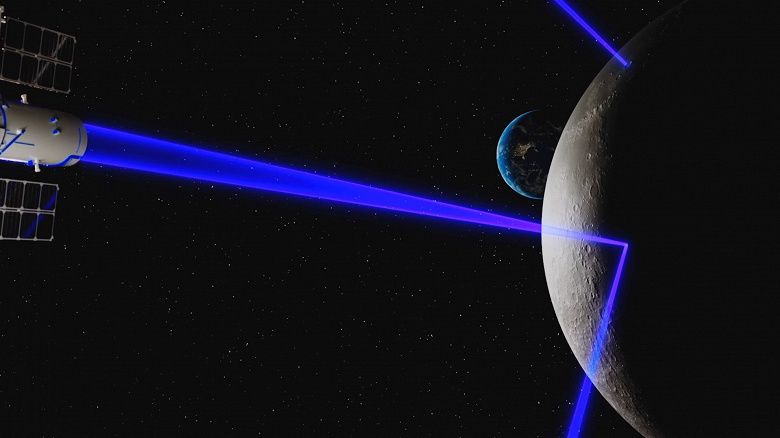
Canadian company Volta Space Technologies is developing the LightGrid system, consisting of a network of satellites in low lunar orbit. These satellites will collect solar energy and transmit it via laser to the lunar surface. The LightPort receiver, weighing less than 3 kg, can be installed on rovers, landers, and mining equipment. According to CEO Justin Zipkin, the system is designed to transmit energy over distances up to 124 miles with a beam focused on a receiver 30 cm in diameter. LightPort converts about 45% of the optical energy into electricity, with the remainder being converted to heat, which can be used to warm equipment during the cold lunar night.
Traditional solutions for powering lunar missions, such as batteries or radioisotope generators, significantly increase costs due to weight, regulation, and thermal shielding requirements (up to $200 million). Volta Space Technologies claims that orbital energy transmission can reduce costs to $500,000, as placing cargo in lunar orbit is three times cheaper than on the surface. Moreover, a single satellite can serve multiple consumers.
The company has already received several grants from government agencies. NASA awarded Volta Space Technologies $50,000 as part of the Watts on the Moon challenge. The Canadian Space Agency (CSA) provided CAD 978,822 (approximately $715,000) for the development of a satellite energy receiver. Additionally, Volta entered NATO’s DIANA (Defence Innovation Accelerator for the North Atlantic) program in 2026, receiving €100,000 (about $107,000) and the potential for additional funding for testing and evaluation.
As part of the CSA project, a smaller version of the LightPort is being developed for installation on Firefly Aerospace’s Blue Ghost 2 lander, scheduled for launch not before late 2026. Volta Space Technologies is also exploring the use of its technology for transmitting energy to drones, enabling extended flight without battery replacement. NATO is interested in applying this technology in Arctic conditions, where reliable energy sources are essential for scientific research.
In addition to energy transmission, the LightGrid system can be used for optical communication and navigation. Three satellites working together can provide positioning, navigation, and timing services, reducing the cost of critical lunar infrastructure. The potential for this technology to revolutionize space exploration is immense, providing new opportunities for collaboration with international space agencies and commercial partners, paving the way for sustainable lunar operations.