

Scientists from Tsinghua University (Beijing) have developed an algorithm that allows autonomous vehicles to take into account the physiological state of passengers for making safer decisions in complex road situations. In the study, functional near-infrared spectroscopy (fNIRS) technology, a non-invasive method of monitoring brain activity in real-time, was used. fNIRS allows tracking changes in brain activity related to stress, emotions, and risk perception.
“Functional near-infrared spectroscopy [fNIRS] is a non-invasive method of monitoring brain activity in real-time that can provide information related to risk perception and human emotional states, and is thus considered a tool that can improve autonomous driving systems,” said the lead author of the study, Professor Xiaofei Zhang.
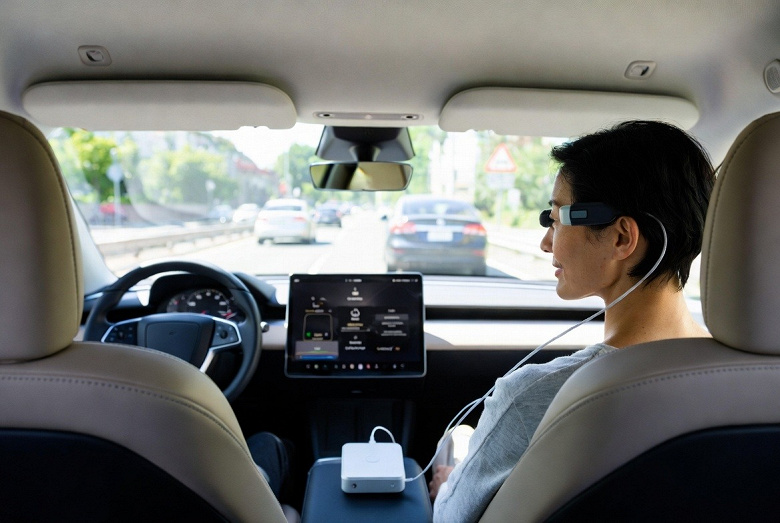
The developed system integrates data on passengers’ brain activity with autonomous driving software. When the system detects an increased level of risk or stress in passengers, the car automatically switches to a more cautious driving strategy. The algorithm, based on reinforcement learning, takes into account human reactions, allowing it to adapt more quickly and make safer decisions.
During trials, the system switched to a more conservative driving mode when passengers exhibited signs of anxiety, resulting in the car reacting more cautiously in dangerous situations. The study demonstrated that this approach outperforms traditional autonomous driving methods in several parameters, including learning speed, overall safety, and comfort.
The authors of the work note that the tested driving scenarios were relatively simple, and the study participants were from a narrow age range and had similar social backgrounds. Future research plans to test the algorithm in more complex driving scenarios, as well as improve the accuracy and reliability of risk assessment by integrating information from vehicle sensors.