







Qualcomm Snapdragon X Elite platforms have struggled to gain any significant popularity since their market release. Initially, they were not known for high performance, and recent tests revealed a drop in performance, especially noticeable with Linux systems. 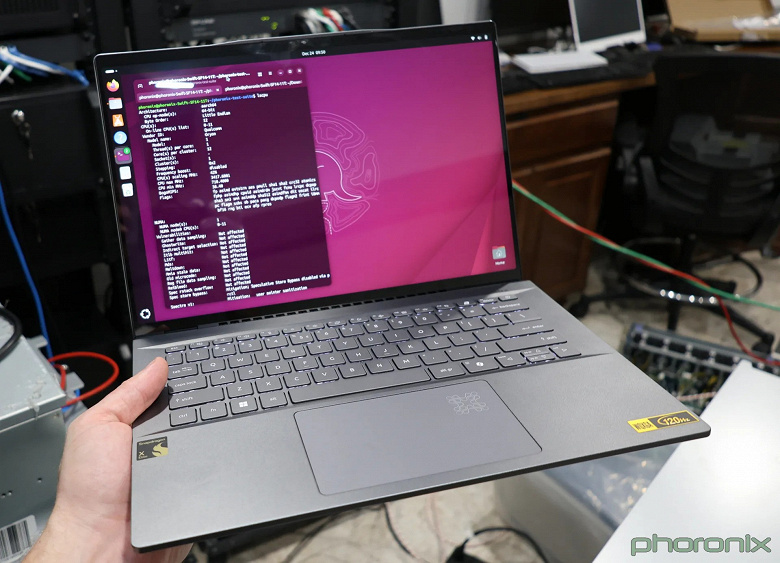 Phoronix authors tested the Acer Swift 14 AI based on the Snapdragon X1 Elite and compared it to their September results. The performance appears to have decreased, becoming comparable to older processors such as Ryzen 7 5850U and even Core i7-1185G7. Although the September results were 17% higher, they still didn’t make the chip stand out in performance. The Core Ultra 7 155H was faster.
 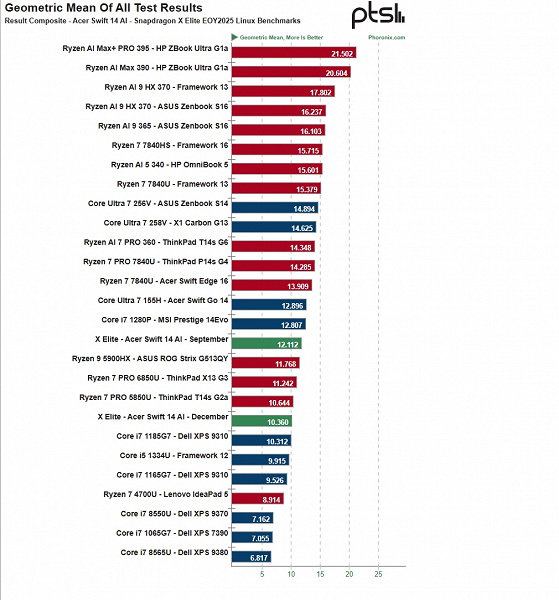 Phoronix Photo Considering that progress in Arm64 support on Linux is developing quite rapidly-demonstrated by the introduction of nested virtualization and secure control stack (GCS) support-one might expect improvements after several updates. However, the exact opposite has occurred. Moreover, alongside this, the chip’s heating has increased.
In 2025, the Qualcomm Snapdragon X Elite is seen as a niche product, primarily catering to specialized markets rather than mainstream consumers. Despite its early promise, its functional decline amidst rapid hardware evolution has placed it in a challenging spot. In recent updates to Linux, hardware optimization for ARM64 has seen enhancements like improved power management, yet Snapdragon X Elite continues to struggle to keep pace due to thermal inefficiencies. As ARM64 architecture receives robust kernel support, Snapdragon’s thermal management becomes even more crucial, but Qualcomm has not introduced significant upgrades to substantiate a competitive stance.