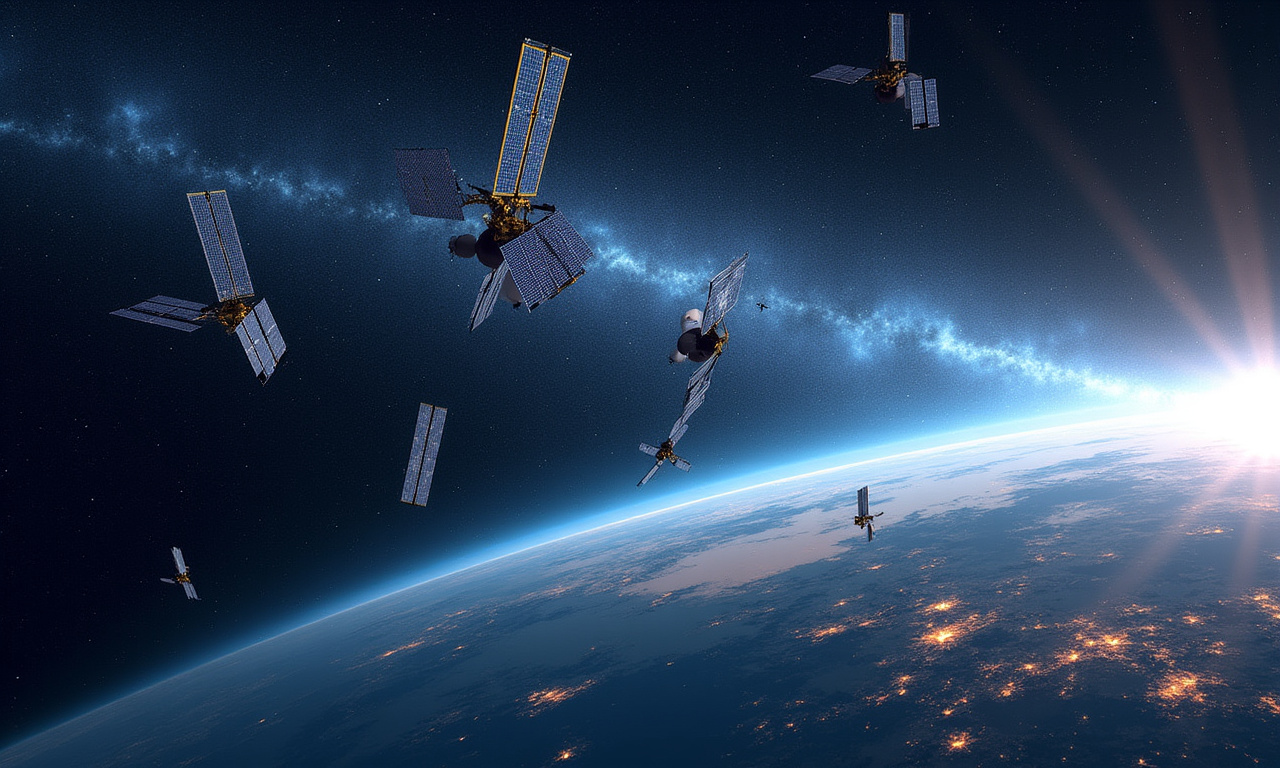
Yesterday, the Chinese Long March-3B («Chang Zheng-3B») rocket successfully launched a next-generation meteorological satellite, Fengyun-4C, into orbit. The launch took place at the Xichang Satellite Launch Center. In China, Fengyun-4C is hailed as the most powerful geostationary weather satellite due to its comprehensive detection capabilities.

Fengyun-4C is equipped with six advanced instruments intended to significantly enhance monitoring of extreme weather events. The new radiometric scanner offers double the spatial resolution and is capable of updating weather data over China every 5 minutes, or every minute in continuous shoot mode. This capability is critically important for tracking rapidly changing atmospheric processes.
The satellite has also been enhanced with an improved atmospheric sonde, whose resolution has been increased from 12 to 8 km, ensuring more accurate forecasts of typhoons and storms. For the first time in China’s history, space weather observation instruments will allow for spectroscopic imaging of the ionosphere and high-resolution monitoring of solar activity. This advancement will improve the accuracy of predicting solar flares and their impacts on Earth.
The device will occupy a position at 133° east longitude, thereby expanding the coverage area of China’s meteorological system to the central Pacific Ocean. This expansion enhances control over typhoon formation zones, significantly improving disaster preparedness in the region. As of now, China operates a constellation of 10 Fengyun series weather satellites, anticipating a total constellation of 23 spacecraft. China shares data from the Fengyun constellation with 133 countries worldwide.