

According to Nikkei, Kioxia is set to begin production of next-generation NAND memory (BiCS9 and BiCS10 3D NAND) next year, ahead of the initial schedule. The BiCS10 is transitioning to a new 332-layer 3D NAND structure, enabling tasks requiring large data volumes, including those for artificial intelligence.
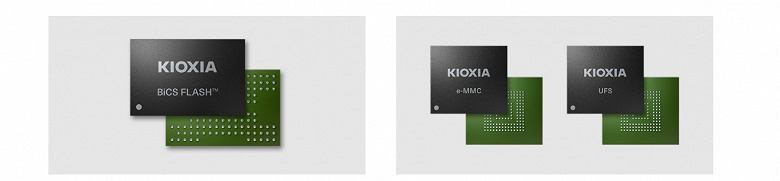
Kioxia initially planned to start production of the 332-layer memory in the second half of 2027, thus shifting the timeline forward by about a year. Interestingly, SanDisk is making similar strides, with analogous plans. The new memory production will be set up at the Fab 2 plant near Kitakami, Iwate Prefecture. The 332-layer memory itself will feature reduced latency and lower energy consumption, providing speeds within the Toggle DDR 6.0 standard (4.8 GT/s).
Industry Impact and Future Developments
The move to accelerate production signals a strategic pivot in response to increasing market demand for advanced memory solutions. This development is anticipated to foster significant breakthroughs in computational efficiency, especially in AI-driven applications. Both Kioxia and SanDisk are leveraging these advancements to capture a larger share of the semiconductor market.
Experts suggest that the reduced energy consumption and enhanced speed characteristics of the 332-layer NAND memory will lead to more energy-efficient and faster-performing consumer products. These technological advancements also position both companies as leaders in addressing the growing need for sustainable technology solutions.
Strategic Dynamics
While Kioxia and SanDisk move in parallel, industry analysts highlight a competitive yet collaborative dynamic that could shape the future of NAND technology. The race towards cutting-edge NAND solutions is not just about immediate commercial advantage but also setting long-term industry standards.