





Company Samsung, reportedly, is preparing to exit the SATA SSD market. Citing several of its sources, insider Moore’s Law Is Dead reported this development. The exit will not be swift. It is reported that in January, Samsung will announce its intention to cease production of these drives, but in fact, it will produce them for quite a while, as it has long-term contracts with clients. However, orders from new customers, apparently, the company will stop accepting immediately after the announcement or shortly thereafter. As a result, Samsung may continue producing such drives for possibly a couple more years.
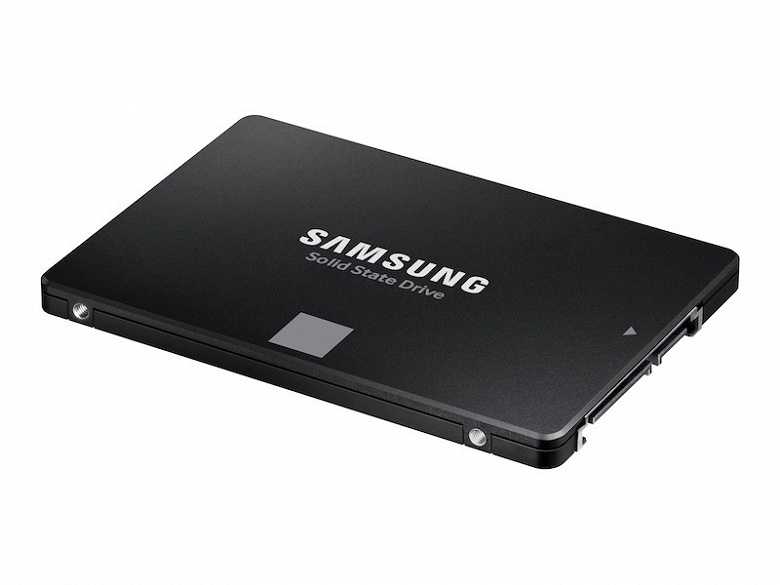
The reasons why Samsung wants to stop the production of such products are not yet known exactly. However, perhaps it simply does not make much sense. If you go on any aggregator or any large online store, you can see that now the most affordable 2.5-inch format SSD with a SATA interface is cheaper than the most affordable M.2 format SSD with PCIe by about $5. In the case of models with a capacity of 128 GB. If you take 1 TB models, the difference is about $10. At the same time, models with PCIe are many times faster, and there are simply no more or less modern motherboards on the market without at least one slot for such a drive.
Nonetheless, the 2.5-inch format still sometimes makes sense even for ordinary users. The point is that many boards are equipped with only one or two M.2 slots, and this is enough for not everyone. Therefore, some users additionally buy 2.5-inch format SSDs to expand the memory capacity. Moore’s Law Is Dead previously reported the announcement dates for the Radeon RX 7800 and Radeon RX 7700, discussed the performance of the iGPU in Intel Meteor Lake processors, and many other topics.
The year 2025 has solidified the rapid evolution in digital storage technology, largely driven by the increased demand for faster and more efficient data handling solutions. The SSD market has seen a notable shift towards NVMe and PCIe interfaces, which offer significant performance advantages over SATA. Reports on the impending launches of PCIe Gen 5 SSDs highlight industry’s momentum towards embracing ultra-fast data transfer rates, setting new benchmarks in storage performance.
Amidst the transition to newer technologies, traditional SATA SSDs, while still viable for budget-conscious consumers, are rapidly being outpaced by alternatives that leverage PCIe lanes for enhanced speed. This technological leap aligns with the anticipated widespread adoption of DDR5 memory, further fueling the need for synchronized upgrades in connected storage solutions. These shifts underscore why companies like Samsung may pivot strategies to focus on high-speed interfaces to remain competitive and meet future market demands.