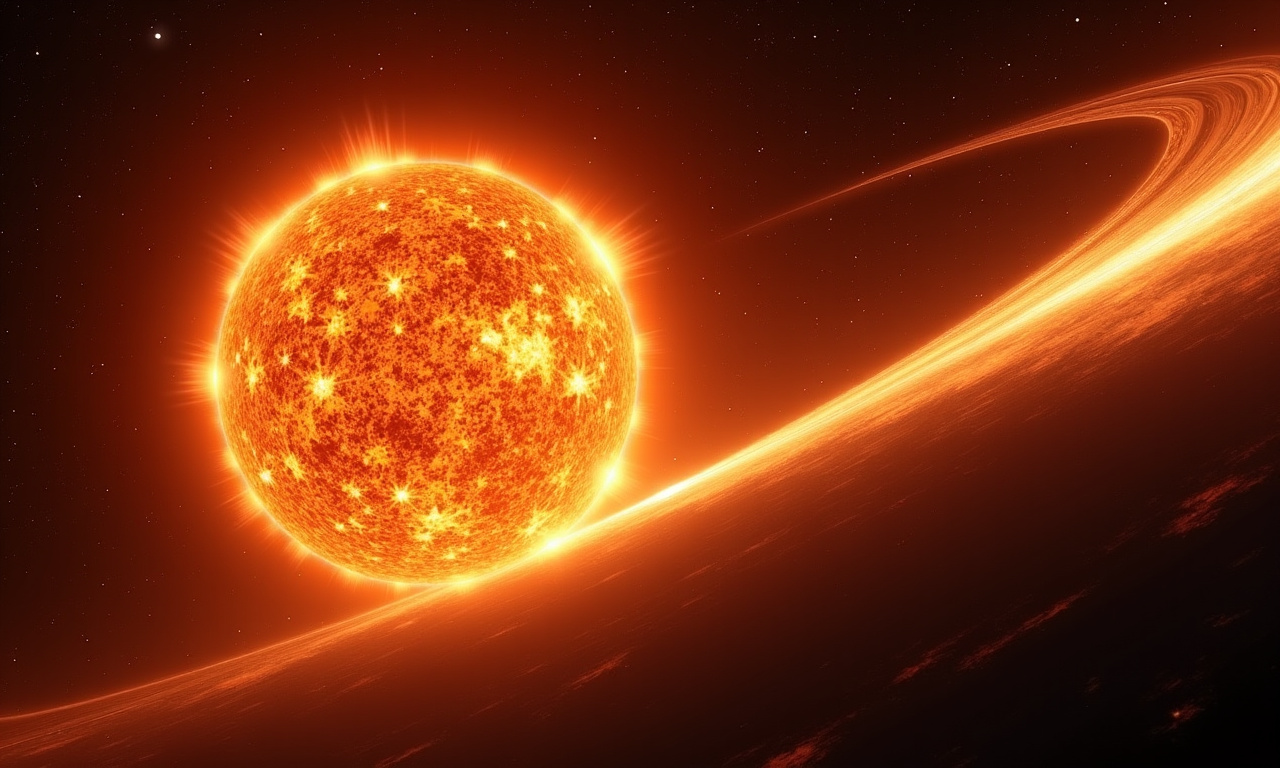

A vivid moment on the Sun has fueled the imaginations of cosmic conspiracy enthusiasts. The spot complex 4294–4296–4298, one of the largest in a decade and the largest in the current cycle, is positioned in the direct hit zone of the interstellar comet 3I/ATLAS. Now, the ejections may intersect with the trajectory of the interstellar object 3I/ATLAS, which is moving away from the Sun but located on the side facing Earth, at an angle of about 65°, and on December 19 will approach our planet at the minimum distance.
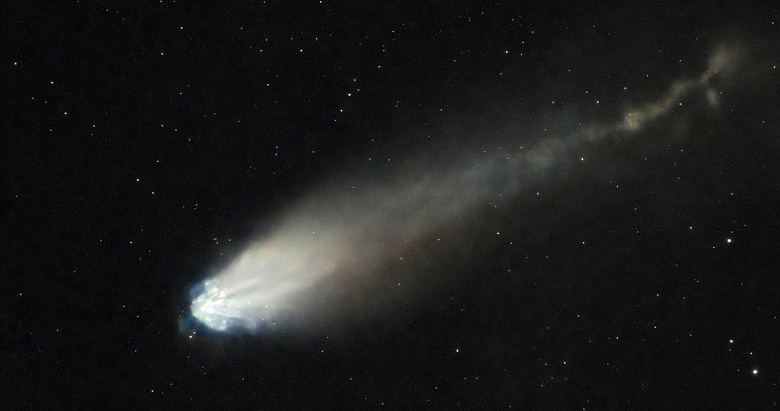

A maximal level X flare occurred on the Sun. This active center behaves strangely: with an area of over 2000 micro-hemispheres (one of the largest in history), from December 1 to 7 it did not produce any flares of level M or X, as if it were accumulating energy. Only on December 8 did the first X1.1 flare and eight class M flares occur. Such passivity for a structure of this size seems anomalous. All of this does not correspond at all to the record size of the active center or the general notions of the total reserves of accumulated energy within it.
Recent Developments in Solar Observations
The Solar Astronomy Laboratory of the Institute of Cosmic Research and Space Activity Center noted today and tomorrow the trajectories of the complex and 3I/ATLAS intersect, placing the object in the possible area of plasma ejection impact. Reports from Goddard Space Flight Center revealed that the object was sighted by the apparatus from early May to early June 2025. This is 55 days earlier than the date of its official discovery.
In recent months, significant attention has been drawn to the advanced capabilities of satellites observing the Sun, providing deeper insights into solar cycles than ever before. With technological advancements, researchers can now analyze solar activity with unprecedented precision, offering better predictive models for solar storms and their potential impacts on Earth’s atmosphere and human technology. The solar flare happening in December 2025 emphasizes the importance of these observations, as they contribute crucial data for safeguarding satellite operations and communication systems.
As for the comet 3I/ATLAS, ongoing studies have captured its unique properties, primarily its trajectory across the solar system. Such comets are rare, making this a valuable opportunity for scientists to study interstellar objects. Telescopes and probes continue to monitor its path, enhancing our understanding of these cosmic travelers. The alignment of solar activity and the comet’s journey is not only a fascinating coincidence but also a reminder of the dynamic nature of our solar neighborhood.